
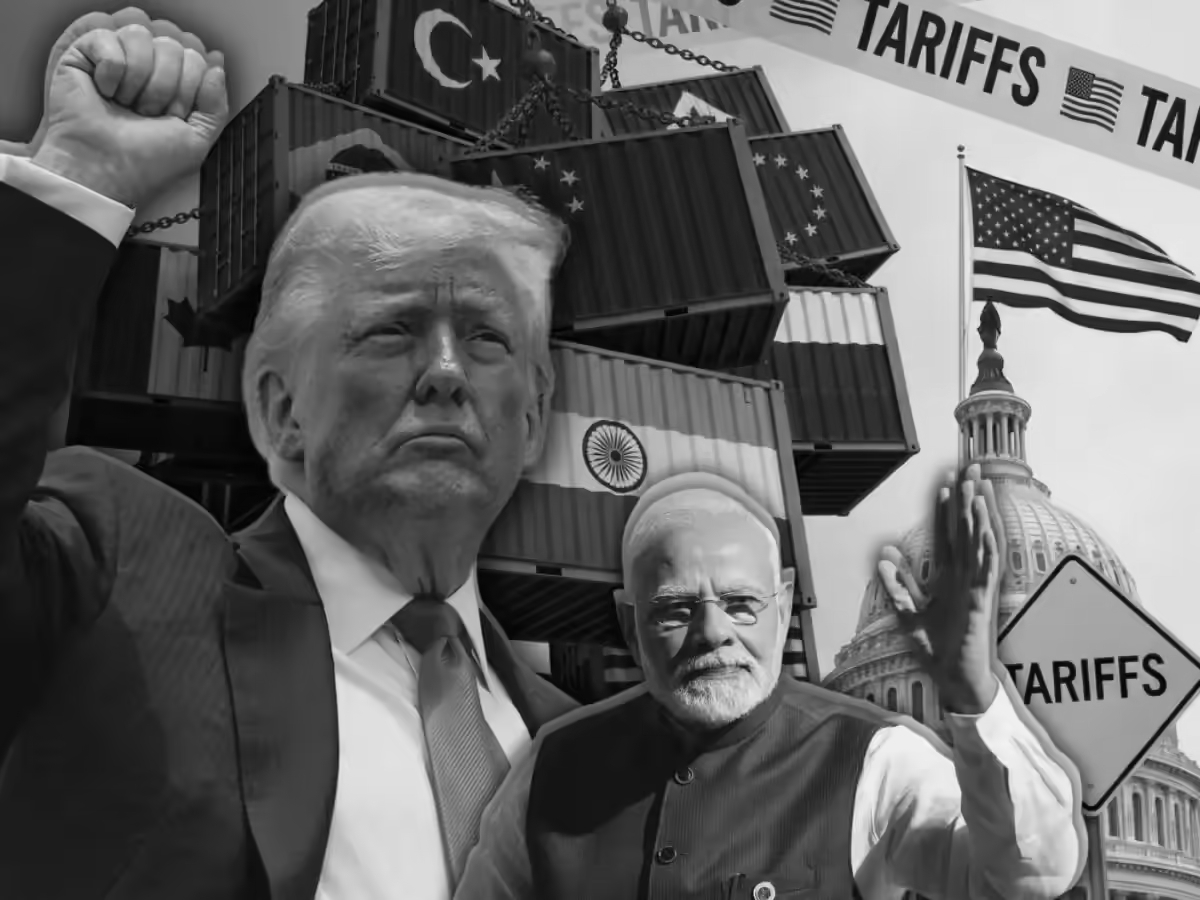
Trump, Modi announce US-India trade deal, US tariffs on Indian goods cut to 18%
US President Donald Trump and Indian Prime Minister Narendra Modi confirmed a major trade understanding between their countries on February 2, following a phone conversation described by both leaders as productive and forward-looking. Trump first posted the announcement on his Truth Social platform at around 10:28 pm IST , making sure he led the news and grabbed the spotlight, before any separate statement from India. Prime Minister Modi later responded on X at approximately 11:02 pm IST , welcoming the agreement and highlighting the significance of strengthened US-India ties.
According to Trump, the leaders agreed on several key trade and energy measures. He said the United States will reduce reciprocal tariffs on Indian goods from 25 per cent to 18 per cent , effective immediately. He also claimed that India would reduce its tariffs and non-tariff barriers on US products to zero and stop buying Russian oil , while committing to purchase over $500 billion worth of US energy, technology, agricultural products, coal, and other goods . While these points are stated in Trump’s post, the Indian government has not yet made a separate formal announcement , and details of the agreement are expected to be clarified in official documentation.
Prime Minister Modi welcomed the development, tweeting: “Wonderful to speak with my dear friend President Trump today. I am delighted that Made in India products will now have a reduced tariff of 18 per cent.” He thanked Trump on behalf of the 1.4 billion people of India and emphasized that cooperation between the world’s two largest democracies unlocks immense opportunities for mutually beneficial growth . Modi also expressed support for global peace initiatives and said he looked forward to taking the partnership to unprecedented heights.
The deal comes after a series of US tariffs on Indian goods in 2025. On April 2, the US imposed a 26% “reciprocal tariff” on several Indian imports as part of its global “liberation day” tariff actions. On April 10, Trump paused the tariffs for 90 days but maintained a 10% duty on all US imports. On July 31, he announced a 25% tariff on all Indian goods , warning of further penalties if India continued buying Russian oil. By August 7, the tariffs were boosted to 50% , the highest among all US trading partners, citing India’s ongoing purchase of Russian oil.
Before Trump’s tariffs, Indian exports to the US faced a more moderate and predictable regime, with average duties around 15% , higher rates on agriculture, automobiles, and food items, and lower or zero tariffs on pharmaceuticals, electronics, and industrial products. The additional US tariffs had pushed the effective burden on many Indian goods close to 50%, significantly impacting exporters. If Trump’s post reflects reality, the 25% additional duties may now be removed, bringing the effective US tariff on many Indian products down to 18% , while India’s own tariffs on US goods could fall from roughly 15% to zero - a major shift in favor of US exporters, although official confirmation from Indian authorities is still awaited .
The new 18% rate for India is slightly higher than levels agreed with some close US allies, who were largely exempt from the steepest tariffs. Countries such as the European Union, Japan, and South Korea enjoyed tariffs reduced to around 15% on many exports, while other Asian countries like Malaysia, Indonesia, Bangladesh, Sri Lanka, and Pakistan faced rates in the 19–20% range. Compared with these, India’s current position places it in the middle - higher than US allies but roughly comparable to other Asian partners under the reciprocal tariff regime. China faced far harsher tariffs under Trump’s 2025 policy, with duties up to 100–125%. After a late‑2025 agreement, the headline reciprocal tariff fell to about 10%, though Section 301 duties up to 25% still apply.
While both leaders have welcomed the announcements, and Modi has publicly acknowledged the tariff reduction, official confirmation on all aspects of the deal—including the cessation of Russian oil imports, the exact reduction of tariffs, and the implementation timeline is still awaited .