
Trump Shadow Looms Large Over BRICS: Why Western Media Made BRICS About America
What if the biggest story about the BRICS summit was not what happened in New Delhi, but what some Western media outlets expected to happen there? While reports spoke of a looming Donald Trump shadow, internal divisions and the Ukraine war, the summit itself appeared far less interested in making America the centre of its conversation.
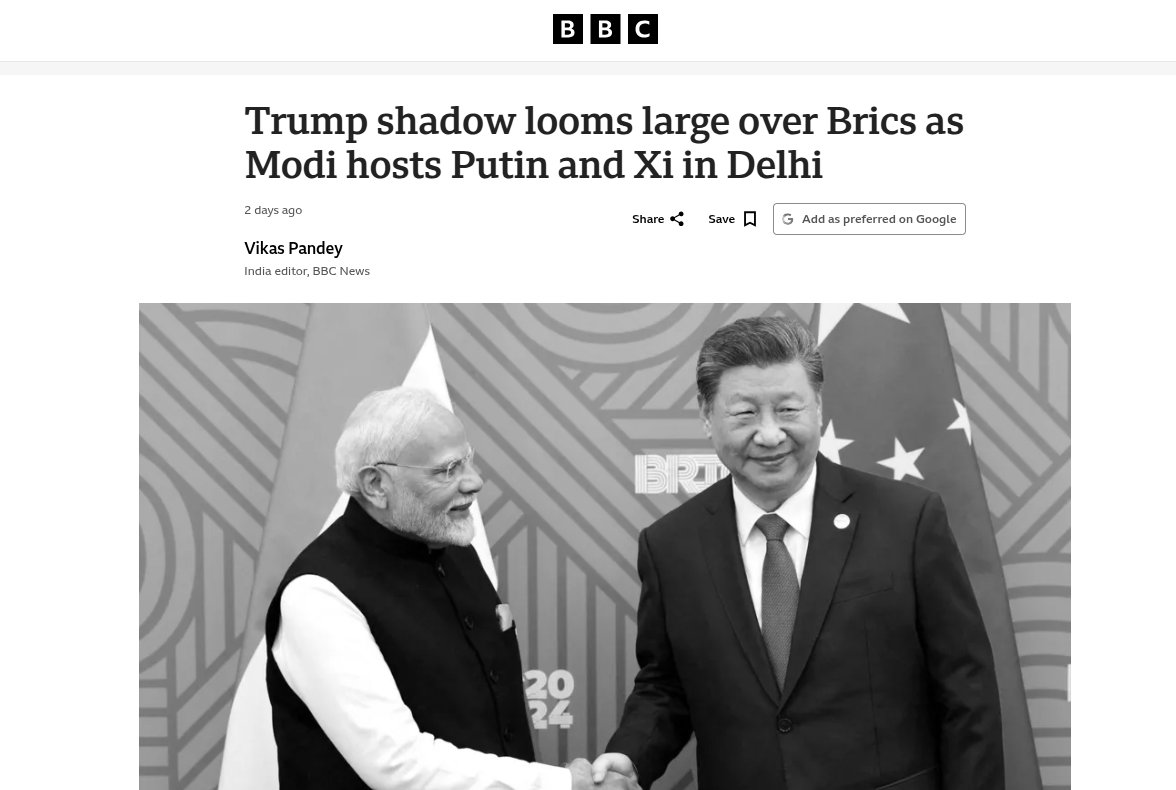
One of the most striking headlines came from the BBC: “Trump shadow looms large over BRICS as Modi hosts Putin and Xi in Delhi.” But where exactly was that shadow? For many watching the summit from New Delhi, the gathering was almost a welcome break from the constant focus on Trump and his latest statements. The attention was on the BRICS countries, their priorities and their cooperation.
The BBC argued that BRICS was unlikely to openly call out US policy. Technically, the joint statement did not mention America or Trump by name. But it did take aim at several policies strongly associated with Washington. The statement opposed tariffs and non market measures, criticised unilateral sanctions and condemned unilateral aggression. So while the US was not named, the policies being challenged were hardly difficult to identify.
The BBC report also relied on just one foreign policy expert, an American, while discussing the future of BRICS. There was no comparable BRICS expert perspective in a story about the grouping. Yet the conclusion remained that Trump would loom over the summit.
‘The Independent’ offered another example. Its coverage framed the New Delhi meeting around the war in Ukraine and the conflict in West Asia as tests of BRICS unity. West Asia was certainly relevant. But Ukraine was notably absent from this year's joint statement.
The 45 page document did not mention Ukraine even once. BRICS statements in 2024 and 2025 had referred to the conflict, but this year's statement did not. For those in New Delhi following the summit, this was hardly a surprise. Yet Western coverage continued to place Ukraine prominently in the frame.
Then came ‘The New York Times’, which focused heavily on India and China with the headline “China and India Vie for Influence in a Club of Emerging Powers.” India and China undoubtedly have differences. Their rivalry matters and there are serious unresolved issues between them. But reducing BRICS to an internal contest between two members risks missing the larger purpose of the grouping.
This may reflect a broader problem in how Western institutions view international organisations. Groups such as NATO have traditionally operated with a clear centre of power, with the US playing the dominant role. When another grouping has multiple power centres and no single country dictating terms, internal differences can quickly become the main story.
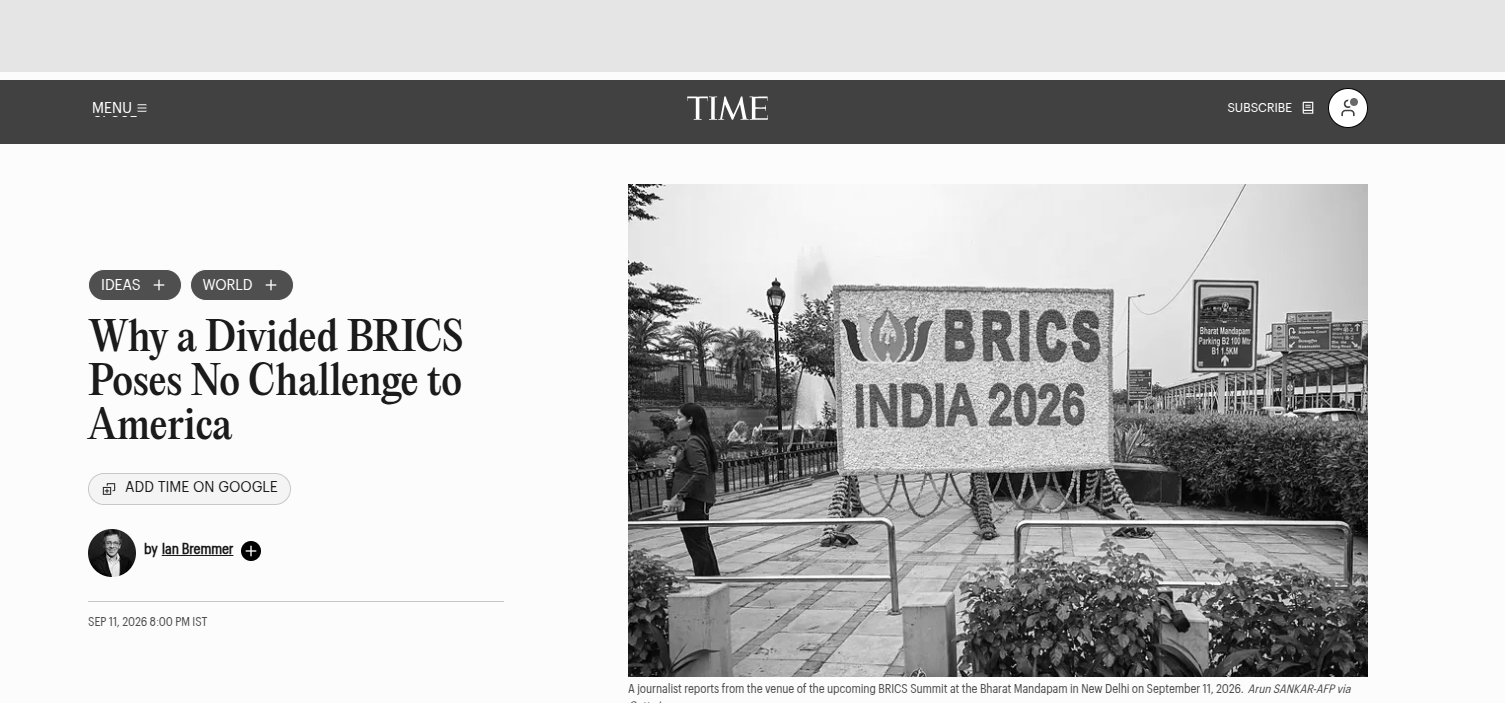
‘Time magazine’ went even further with the argument that a divided BRICS can never become anti-American or anti-Western. But who says BRICS has to be either? Why should every decision taken by emerging economies be judged by whether it is good or bad for Washington or the West?
The question, therefore, should not be whether BRICS is anti-American or anti-Western.
The better question is: why does BRICS have to be defined through America at all?