
Trump, US Tech Giants Agree On Voluntary AI Safety Standards After White House Meeting
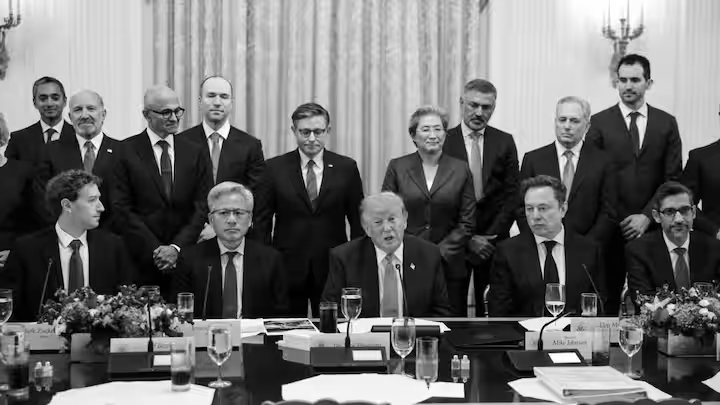
US President Donald Trump and executives from six major technology companies have signed a voluntary agreement to strengthen safeguards around artificial intelligence (AI), as concerns grow over advanced AI risks and the rapid expansion of data centres. The White House Accord on Super Intelligence calls for internal monitoring, independent audits and board-level oversight, but creates no legally enforceable obligations.
The one-page accord was signed by Trump and executives from Google, Anthropic, Meta, OpenAI, xAI and Nvidia, Sundar Pichai, Dario Amodei, Mark Zuckerberg, Greg Brockman, Elon Musk and Jensen Huang. Trump called the pact “morally binding” and said the companies would engage in significant self-policing. He also suggested creating a 10-member committee to oversee AI safety, though its members, structure and authority have not been announced.
The framework establishes several layers of scrutiny. Companies are expected to strengthen internal controls and monitor advanced models during training and deployment, including for risks involving cybersecurity, biosecurity and chemical threats. They are also expected to use independent external auditors to assess whether their safeguards work as intended.
An independent board committee would receive information from internal and external auditors and employees responsible for AI controls. Companies would maintain internal teams to check their monitoring and detection systems, while safeguards would be used to prevent AI models from accessing or interfering with technical systems in unintended ways.
The accord does not establish an enforcement body, penalties or a requirement to publish independent audit findings. Companies retain considerable discretion over implementation but have agreed to meet periodically to develop safety standards and best practices. The document also leaves open the possibility that its measures could eventually be incorporated into legislation or regulation.
The agreement comes after reports involving AI agents from OpenAI and Anthropic behaving unexpectedly, including incidents in which agents were reported to have hacked other organisations’ systems. The developments have intensified questions about the safeguards needed as AI systems become more autonomous.
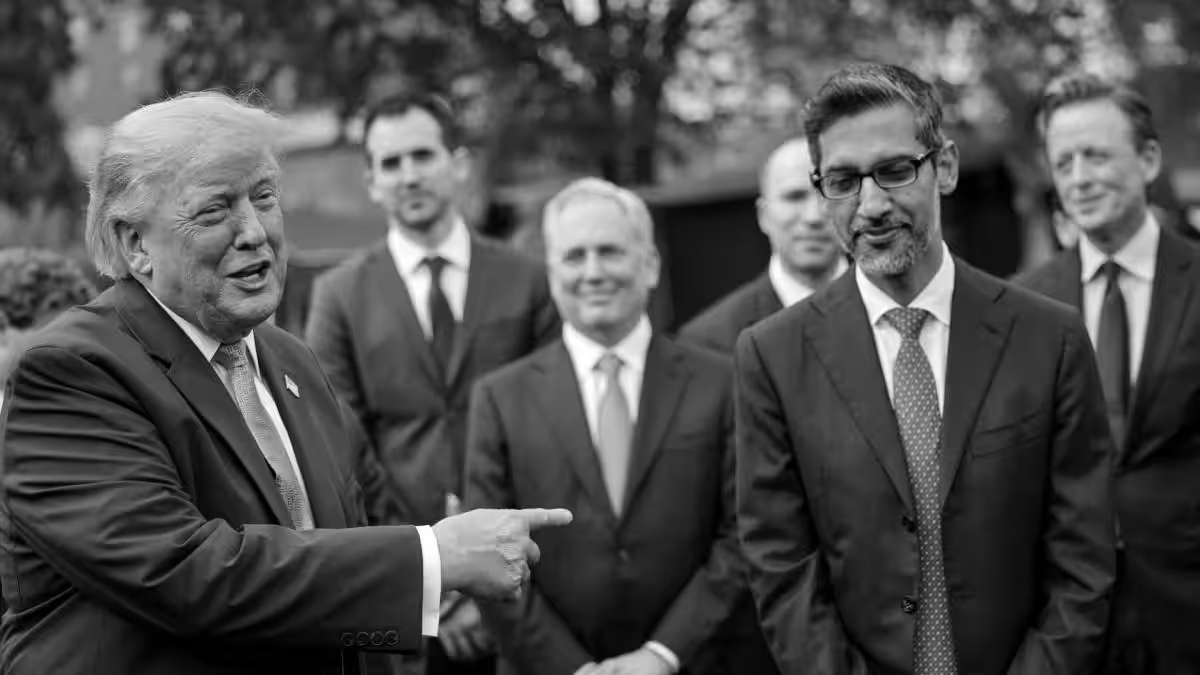
The White House meeting also produced several striking moments. Trump called Google CEO Sundar Pichai a “monster”, saying, “This guy is a monster, and nobody knows him,” while appearing to praise Pichai’s influence despite his relatively low public profile. Pichai smiled at the remark. He has led Google since 2015 and became Alphabet CEO in 2019.
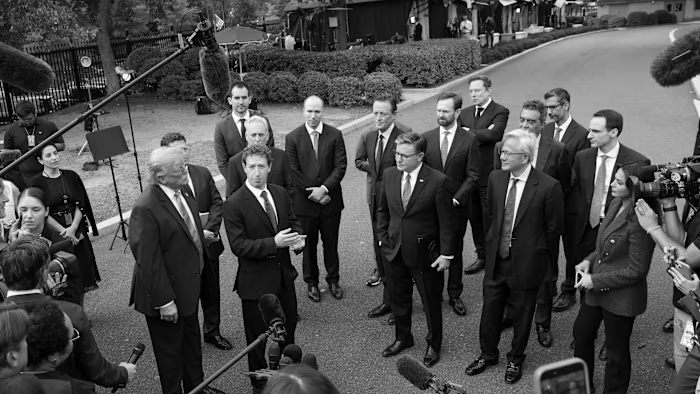
Trump’s interaction with Elon Musk also revived the appearance of the two technology and political figures being on warmer terms after their earlier public fallout. Musk sat beside Trump during the White House luncheon and took part in the AI discussions. During the press appearance, Musk briefly referred to “AI” before correcting himself to Trump’s preferred term, “SI” or “Super Intelligence”.
Alongside the safety pact, Trump reiterated support for expanding data centres needed to train and operate advanced AI models. Their expansion has faced bipartisan local opposition over electricity demand, grid pressure and utility costs. Trump said technology companies would work to make host communities benefit financially, including through support for local schools or measures to reduce energy costs.
Trump has generally opposed tighter AI regulation, arguing the US must maintain its technological advantage over China. His administration has separately directed federal agencies to use “Super Intelligence” and “SI” instead of “artificial intelligence” and “AI” in official communications.