
Trump Warns Iran of 'Last Chance'. But Can Washington Afford the Talks to Fail?
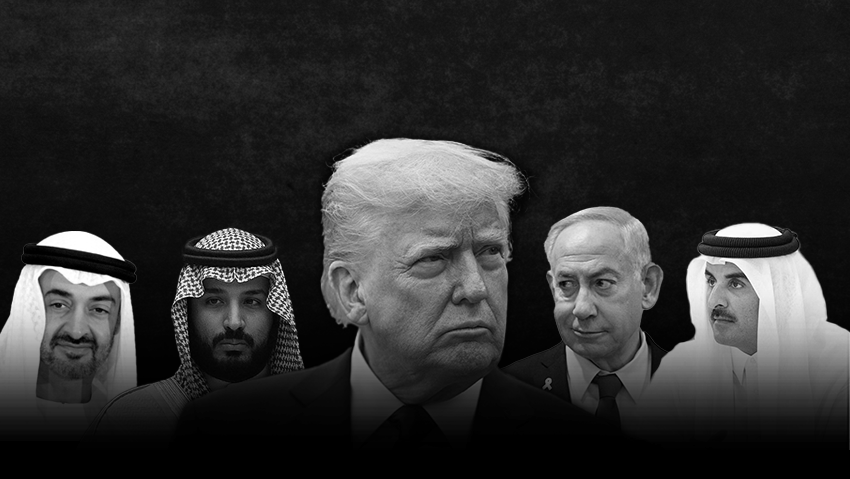
US President Donald Trump has warned Iran it is facing a "last chance before decapitation" to reach an agreement with Washington. Trump said the United States could strike a deal with Tehran to reopen the Strait of Hormuz by Wednesday, adding that he wanted to give Iran every opportunity to negotiate before considering further military action. He said Gulf partners, including Saudi Arabia, the United Arab Emirates and Qatar, were helping facilitate the diplomatic push.
Iran, however, rejected Trump's claims, insisting there are no direct negotiations with Washington. Tehran said its discussions are being conducted only through Oman and are focused on maritime navigation rather than a broader political settlement. Iranian officials have maintained that the Strait of Hormuz cannot fully reopen while what they describe as US aggression continues.
The fragile diplomacy comes as security concerns persist in the strategic waterway through which nearly a fifth of the world's oil supply passes. On Tuesday, an unknown projectile struck a cargo ship in the Strait of Hormuz, highlighting the continued risks to global shipping despite ongoing negotiations.
The urgency of the talks reflects more than concerns over Iran's nuclear programme. It is also driven by Tehran's Axis of Resistance, a network of allied militias and armed groups that allows Iran to project military influence far beyond its borders.
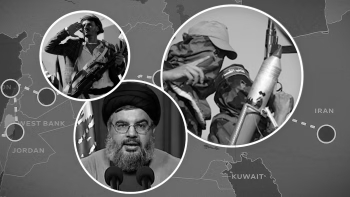
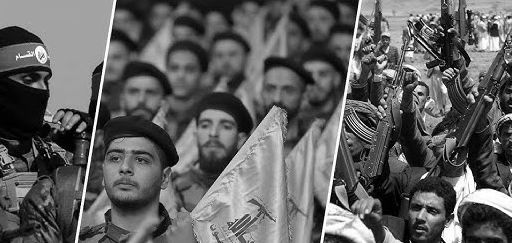
While the Houthis, Hezbollah and Hamas are the best known members of the alliance, the network is much broader. In Yemen, the Houthis have become Iran's most active regional partner, targeting commercial shipping in the Red Sea, launching missiles toward Israel.
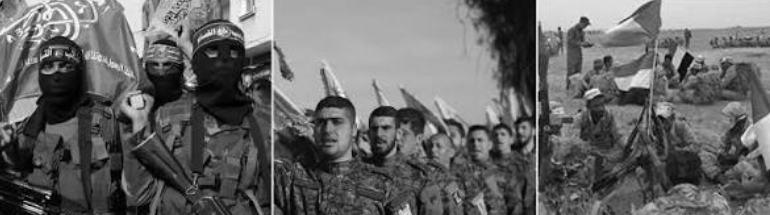
In Lebanon, Hezbollah remains Iran's strongest regional ally, receiving financial, military and logistical support from Tehran. Until the collapse of Bashar al Assad's government in late 2024, Syria served as a critical land bridge for moving Iranian weapons through Iraq into Lebanon. In Iraq, Iran maintains close ties with the Popular Mobilization Forces (PMF), an umbrella grouping of predominantly Shia armed factions that includes Kataib Hezbollah. Tehran has also long supported Hamas and the Palestinian Islamic Jihad in Gaza through funding, weapons, training, intelligence cooperation and political backing.
Following the Gaza war, Israel intensified attacks on Iran backed militias in Iraq and repeatedly exchanged fire with the Houthis in Yemen. At the time, many analysts believed Iran's regional deterrence had been severely weakened. Instead, several experts now argue that Tehran doubled down on its long standing proxy strategy, rebuilding relationships and relying more heavily on allied groups to pressure its adversaries without engaging in direct conflict.
Meanwhile, diplomatic efforts continue on another front. Lebanon and Israel have opened a fresh round of US sponsored talks in Rome, with both sides seeking an Israeli withdrawal from southern Lebanon. Despite suffering heavy losses, Hezbollah has sought to reassert its position, while Iran has repeatedly reaffirmed that support for the group remains one of its core strategic policies.
For Washington, this is precisely why the current negotiations matter. Iran's Axis of Resistance means any confrontation with Tehran could rapidly expand across the region. Hezbollah can pressure Israel from Lebanon, Iraqi militias can target US forces, Hamas and Palestinian Islamic Jihad can inflame the Gaza front, while the Houthis can disrupt shipping through both the Red Sea and the Strait of Hormuz. That ability to open multiple fronts simultaneously remains one of Iran's most powerful strategic assets.