
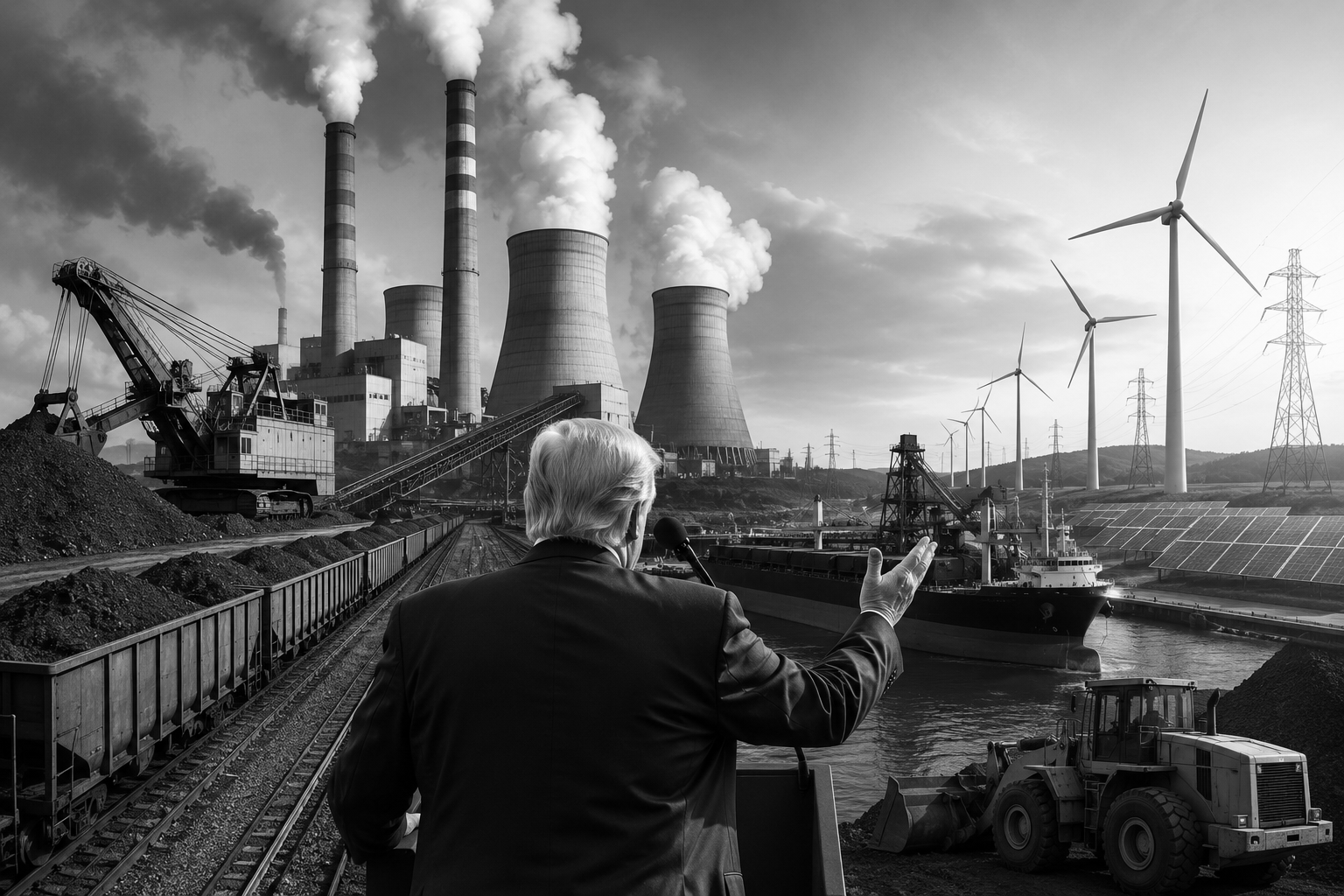
Trump's $700 Million Bet on Coal and America's Energy Future
As the world accelerates its transition toward cleaner energy, US President Donald Trump is charting a different course. In a major policy announcement, the Trump administration has unveiled a nearly $700 million package to revive America's coal industry, arguing that rising electricity demand from artificial intelligence, data centers, and electric vehicles requires dependable sources of power. The move has reignited a broader debate over whether governments should prioritize energy security or climate commitments as global power needs surge.
The package, backed by the Defense Production Act (DPA) , will support 13 coal-fired power plants, help build new coal facilities in Alaska and West Virginia , restart a shuttered plant in Maryland , and assist construction of a long-delayed coal export terminal in Oakland, California . According to the White House, the initiative could support or create more than 14,000 jobs across mining, construction, rail, and maritime industries.
Calling coal “a great business,” Trump said the fuel remains a critical source of reliable electricity. The administration argues that coal provides essential baseload power , capable of operating around the clock regardless of weather conditions. Officials have linked the policy to growing concerns about grid reliability as electricity demand rises from AI infrastructure and advanced manufacturing projects across the country.
The announcement marks the latest step in Trump's effort to reverse the long-term decline of coal. Since returning to office, he has ordered several coal-fired plants to remain operational beyond planned retirement dates and has opened millions of acres of federal land for coal mining. The administration says emergency measures taken earlier this year helped prevent power shortages during severe winter weather.
Yet the policy has drawn strong criticism from environmental groups. Opponents argue that coal remains the most carbon-intensive major fuel source and that taxpayer money would be better spent on renewable energy, battery storage, and modern grid infrastructure. They warn that extending the life of aging coal plants could increase emissions and delay progress toward climate goals.
The debate comes against the backdrop of coal's shrinking role in the US energy mix. Coal accounted for roughly 45% of US electricity generation in 2010 , but that figure has fallen to about 15% in 2024 , while natural gas now provides around 43% . Despite the decline, the United States remains one of the world's leading coal exporters, shipping more than 100 million tons annually , primarily to Europe and Asia.
Ultimately, Trump's coal push highlights a growing global dilemma: how to balance the need for reliable, affordable energy with the urgent challenge of reducing carbon emissions. As power demand continues to climb, that debate is likely to shape energy policy far beyond the United States.