
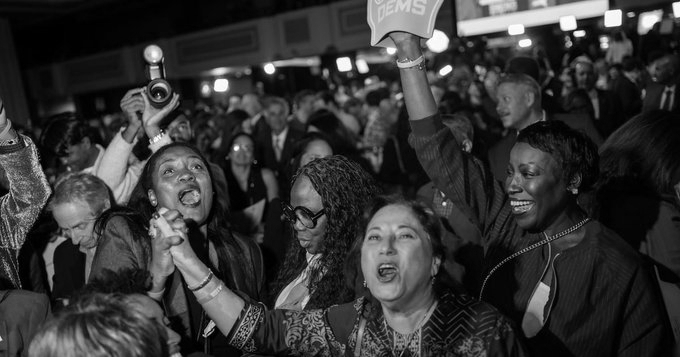
Trump’s Big Midterm Defeat: Democrats Sweep America And Take Control Of Congress
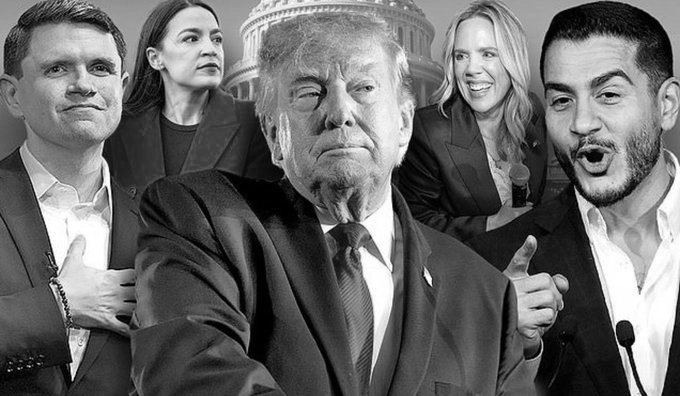
Americans have delivered a stunning rebuke to Donald Trump, handing Democrats control of both chambers of Congress in a sweeping midterm victory. From traditionally Republican Texas to other long-held red states, Democratic candidates pulled off major wins, turning the election into a blue wave and a serious setback for Trump’s political influence.
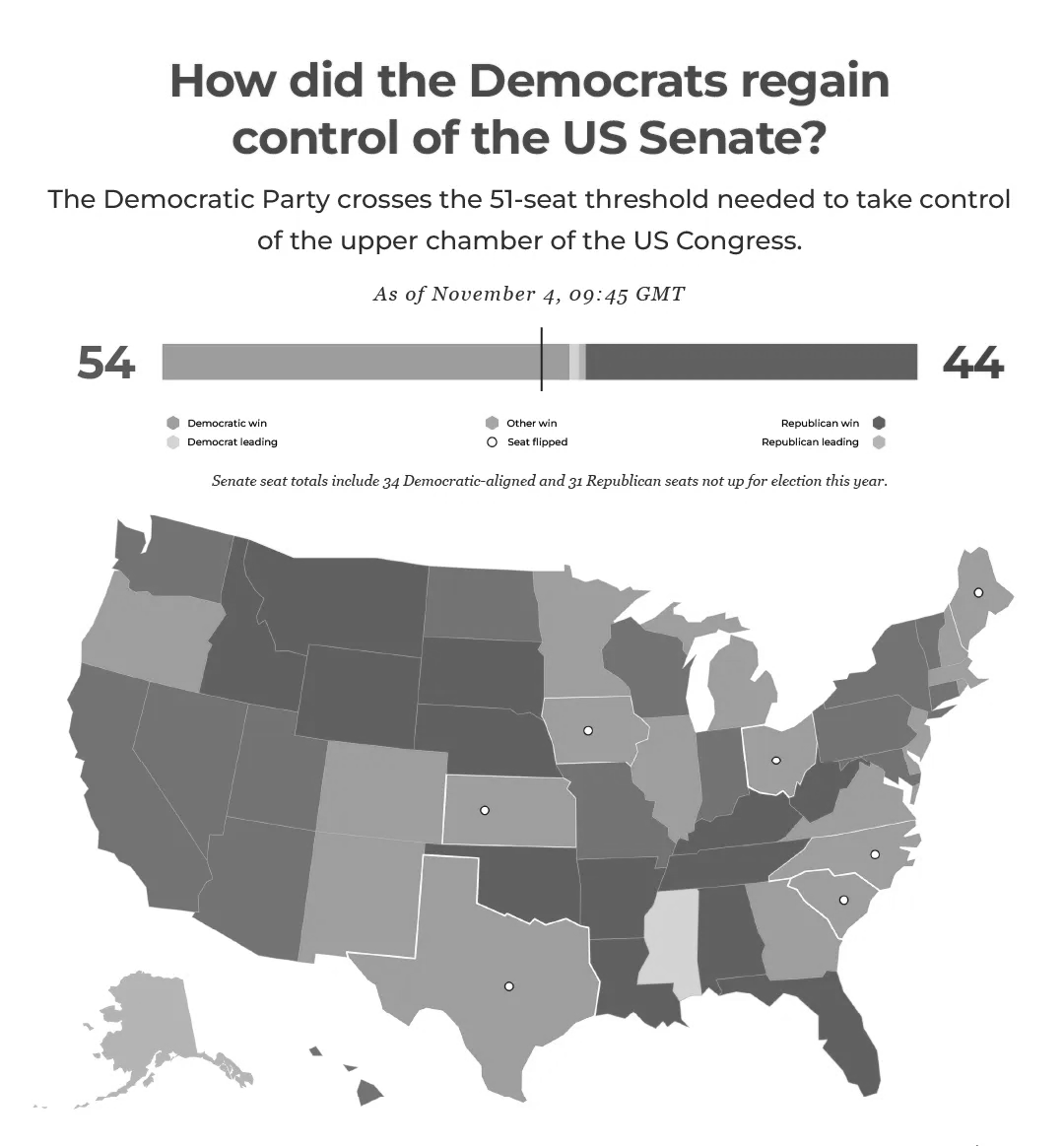
The Senate, the upper chamber with 100 seats, was previously controlled by Republicans with 53 seats against the Democrats’ 47. Democrats have now secured 54 seats against Republicans’ 44, with two races still uncalled, marking a gain of seven seats. In the House of Representatives, the lower chamber with 435 seats, Democrats moved ahead with 228 seats against Republicans’ 139 in the early count, with more than 60 races yet to be decided. Republicans had entered the election with 219 seats, while Democrats held 214.
Although Trump’s name was not on the ballot, he made the election a personal test of his presidency, urging voters to imagine that he was contesting it. After the results, he admitted: “I wasn't on the ballot, but I was on the ballot.” He said he had expected to transfer his rally crowds and support to Republican candidates, but acknowledged that some had failed to perform. Rather than accepting responsibility, Trump blamed the candidates, despite having campaigned heavily for them.
The biggest shock came from Texas, long considered a safe Republican state. Democrats had not won a Senate race there since 1988 or the governorship since 1994. Both records were broken. Democrat James Talarico defeated Trump-backed Ken Paxton, declaring: “We just proved that all the money in the world is no match for the people of Texas. We just showed that a politics of division is no match for a politics of love.” He added that power belonged to the people, not billionaire donors or defenders of a broken political system.
Elon Musk, who shifted Tesla’s headquarters to Texas amid disputes over California taxes, spent about $366 million in the 2026 election cycle, including $276 million since July. A $10 million contribution went to a political group supporting Paxton. Yet the spending did not prevent the Democratic victory. In the governor’s race, Gina Hinojosa defeated Greg Abbott, becoming Texas’s first Latina governor and the first Democrat to hold the office since Ann Richards.
Democrats also made historic gains elsewhere. Adam Hamilton defeated Republican incumbent Roger Marshall in Kansas, giving the state its first Democratic senator since 1932. In South Carolina, Annie Andrews defeated Darline Graham (sister of Lindsey Graham), becoming the first woman elected to represent the state in the US Senate. In Iowa, Josh Turek won the Senate race against Ashley Hinson, while Democrat Rob Sand captured the governorship, ending a long Republican hold.
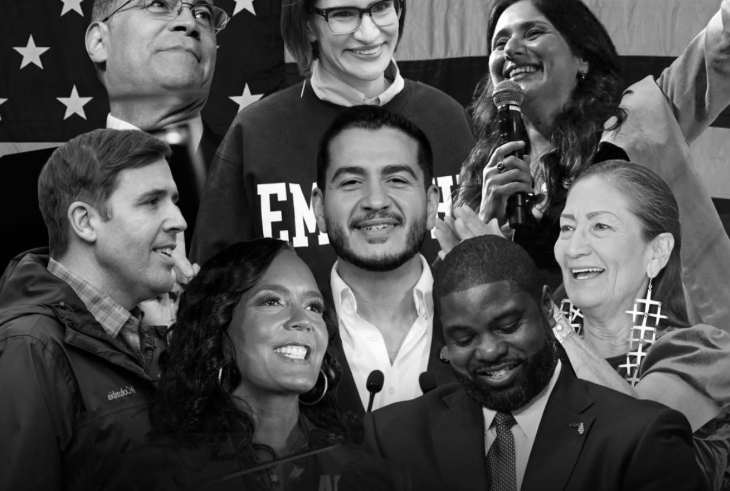
The results produced several historic firsts. Keisha Lance Bottoms became Georgia’s first Black woman governor and the first woman to hold the office. Deb Haaland won in New Mexico, becoming the first Native American woman governor. Minnesota elected Peggy Flanagan, the first Native American woman to serve in the Senate, while New Hampshire elected Chris Pappas, the first openly gay man to win a US Senate seat. Florida’s Byron Donalds and Wisconsin’s David Crowley became their states’ first Black governors. California elected Xavier Becerra, its first Latino governor.
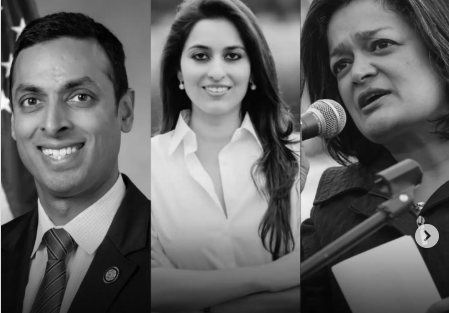
Republican-backed Vivek Ramaswamy lost the Ohio governor’s race to Democrat Amy Acton. Indian-American Democrats Ro Khanna and Ami Bera retained their House seats, adding to the party’s strength in the chamber. Around 57 Indian-American candidates had contested elections across the country.
The verdict was also a referendum on Trump’s presidency. Exit polls identified the economy as the biggest concern for 39 percent of voters, followed by democracy at 32 percent, immigration at 14 per cent and healthcare at 8 per cent. Gas prices were reportedly 17 percent higher than a year earlier, while inflation stood at 3.7%, adding to pressure on household budgets. Trump’s tariffs and foreign-policy decisions were also blamed by critics for pushing up the cost of energy and groceries.
Concerns over democracy included the use of executive orders, questions about business dealings involving Trump’s family, clashes with courts and the administration’s response to immigration protests. Immigration raids and the deportation of families, including spouses of US citizens, also became politically damaging, particularly in border states such as Texas.
The voting patterns showed Democrats gaining ground across communities. White voters split 48 percent for Democrats and 51 percent for Republicans. Among Black voters, the split was 89 percent to 10 per cent; among Hispanic voters, 62 percent to 35 percent; and among Asian voters, 70 per cent to 29 percent.
Indian-American voters also appeared to move away from Republicans. A survey indicated that 62 percent intended to support Democrats, against 19 percent for Republicans, with the rest undecided. Republican support among Indian Americans had stood at 30 percent in 2024. Concerns included Trump’s birthright citizenship proposal, higher costs for work visas, trade tensions and JD Vance’s description of foreign-worker visa holders as “indentured servants”.
Trump had promised voters no new wars and relief from inflation. He also floated a $5,000 payment to every American if Republicans retained Congress. But the cost-of-living crisis, immigration and concerns about democratic institutions overshadowed those promises.
The Iran war emerged as a major source of disillusionment, even among voters who had backed Trump in 2024. Vice President JD Vance directly blamed the war for the Republican defeat, saying former Trump supporters had switched to Democrats. More significantly, he said voters wanted the war to end, America to focus on inflation and the cost of living, and Washington to change its relationship with Israel. The remarks put the spotlight on Trump's decision to join Israel in the war against Iran, raising questions about whether he had moved away from his America First promise and allowed Netanyahu's priorities to shape US policy.
The electoral setbacks faced by Trump’s allies Netanyahu and Jair Bolsonaro also point to the political risks confronting leaders associated with Trump's brand of politics. Like Trump, both faced voter backlash amid growing discontent over their leadership.
Zohran Mamdani may have also influenced the Democrats’ wider gains emerging as a national political voice after a viral social media exchange with JD Vance, mocking the vice-president’s claims about the Trump administration’s achievements in New York. His influence extended beyond the city, with all three congressional candidates he endorsed, Brad Lander, Claire Valdez and Darializa Avila Chevalier winning their races.
The election has delivered a clear message: Republicans lost ground across race, geography and voter groups, while Democrats turned public dissatisfaction with Trump's second term into control of Congress. The consequences for the remainder of his presidency are now the next big question.