
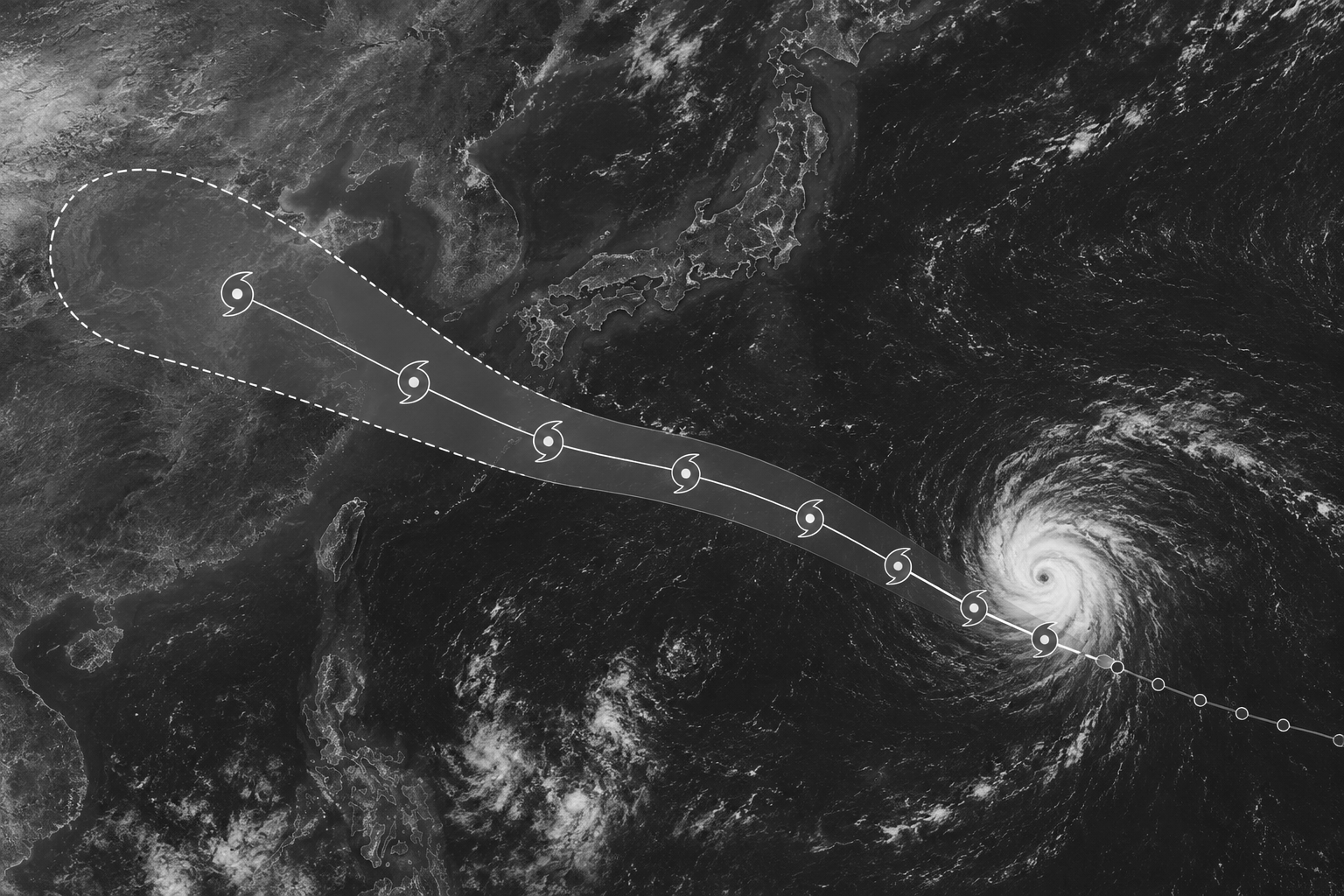
Typhoon Dolphin Triggers Mass Evacuations in Japan, Grounds 500 Flights and Shuts Okinawa Airport
Japan's southwestern regions were placed on high alert on Friday as Typhoon Dolphin swept across the country's southern islands, bringing powerful winds, torrential rain and high waves, while authorities ordered nearly 260,000 people to evacuate and cancelled more than 500 flights.
The slow-moving storm, classified as a Category 1 typhoon, was approaching Okinawa after moving across remote southern islands. The Japan Meteorological Agency said Dolphin was packing sustained winds of 144 kmph, with gusts reaching 198 kmph, raising fears of structural damage, flooding and dangerous conditions along the coast.
Naha Airport, Okinawa's main air hub, was closed on Friday, grounding all domestic and international flights to and from the island. The disruption formed part of a wider transport shutdown as the storm moved closer to heavily populated areas.
Authorities in Okinawa and Kagoshima prefectures issued evacuation orders covering nearly 260,000 residents. Thousands had already moved to evacuation centres, including about 6,700 people in Kumamoto, where many residents are still displaced after houses were damaged or destroyed in last week's magnitude 7.1 earthquake.
The typhoon has already caused injuries in Okinawa. Three men in their 70s suffered minor injuries, with two reportedly caught in strong winds and another falling from a stool that was blown over while he was preparing for the storm. About 240 people had taken shelter at evacuation centres across Okinawa by midday, according to the prefecture.
Dolphin's impact has also extended to Japan's business sector. Toyota suspended operations at nine factories, reflecting the disruption caused by the storm and concerns over worker safety and logistics.
The Japan Meteorological Agency warned that a linear rain band could develop, potentially producing intense rainfall and flooding. Strong winds, heavy rain and high waves are expected to persist in Okinawa through Sunday, with residents urged to remain indoors.
The storm is also threatening parts of Kyushu, including earthquake-hit Kumamoto, where residents have been covering damaged roofs and walls with blue tarpaulins to prevent further water damage. Authorities have warned of additional risks as temperatures in some areas could still climb to 36 degrees Celsius, creating heatstroke concerns alongside the storm threat.
Dolphin is expected to weaken over the weekend as it moves westward towards China's eastern coast, where it is forecast to make landfall by Monday morning.