
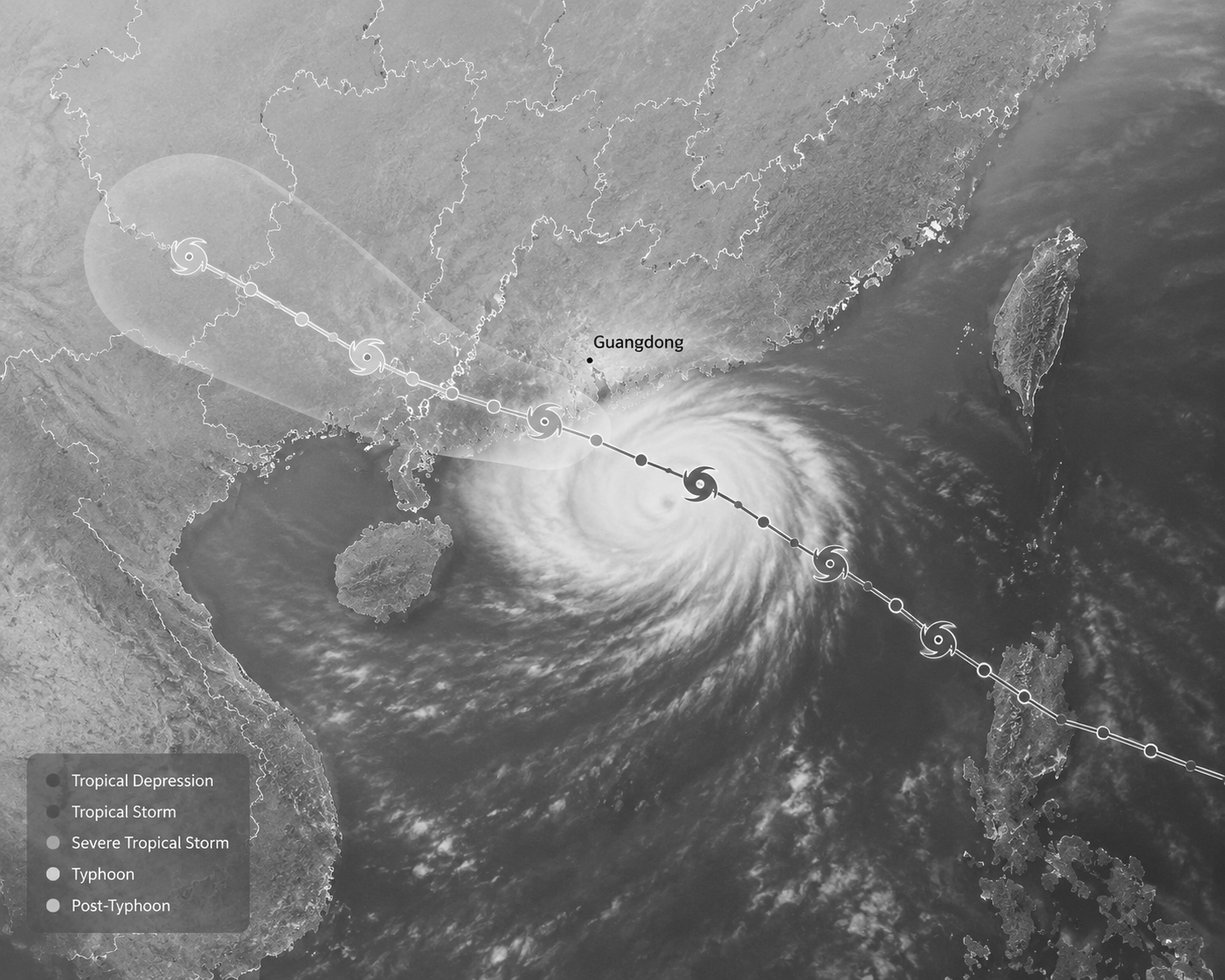

Typhoon Noul Ravages Southern China: 10 Dead, 800,000 Evacuated as Floods Trigger Chaos
Typhoon Noul, the strongest storm to strike China this year, slammed into the southern province of Guangdong early Sunday, leaving at least 10 people dead, triggering massive evacuations, disrupting transport across southern China and Hong Kong, and raising fears of further flooding and landslides as torrential rain continued to batter the region.
The typhoon made landfall near Huidong County in Huizhou City at around 3:50 a.m. local time, packing winds of up to 162 kmph at its peak before gradually weakening as it moved inland. Chinese authorities described Noul as the 12th tropical cyclone of the year and the strongest to hit the country in 2026, as well as the third typhoon to make landfall in China this month, following Bavi and Maysak.
While Guangdong bore the brunt of the storm, 10 people were killed and 23 others were injured in rain-triggered flash floods in the scenic region of Gansu province in northwestern China, where rescue teams continued search and relief operations. Authorities warned that saturated ground conditions could increase the risk of additional flash floods and landslides in the coming days.
The storm prompted one of China's largest emergency responses this year. More than 800,000 residents were relocated to safer areas across Guangdong, a sharp increase from earlier evacuation figures, while emergency shelters were opened and thousands of rescue personnel were deployed. The National Commission for Disaster Prevention, Reduction and Relief activated a Level-IV national disaster relief response, while flood-control authorities raised alerts in several provinces.
China's National Meteorological Center had issued its first red typhoon alert of the year before landfall, the highest level in the country's four-tier warning system. As the storm weakened inland, the warning was downgraded to orange and later yellow, though meteorologists stressed that the danger from heavy rainfall remained high. Red alerts for rainstorms and warnings of flash floods and geological disasters continued in several affected regions.
Transport across southern China was severely affected. High-speed rail services throughout Guangdong were suspended, hundreds of flights were cancelled, and ferry operations were halted. In Hong Kong, around 350 flights were cancelled, nearly 2,000 passengers were stranded over the weekend, and more than 20 people suffered minor injuries. A section of scaffolding on a high-rise building also collapsed, though no major casualties were reported. By Sunday evening, airport operations gradually resumed as weather conditions improved.
Despite weakening into a tropical storm, Noul is expected to bring torrential rain through Tuesday across parts of Guangdong, Fujian, Jiangxi, Hunan, Sichuan, Gansu and other regions. Authorities have urged residents living near rivers, mountains and construction sites to remain on high alert as the threat of flooding and landslides persists.