


UK Steps In After Saudi Arabia Seeks Military Help Amid Escalating Red Sea War
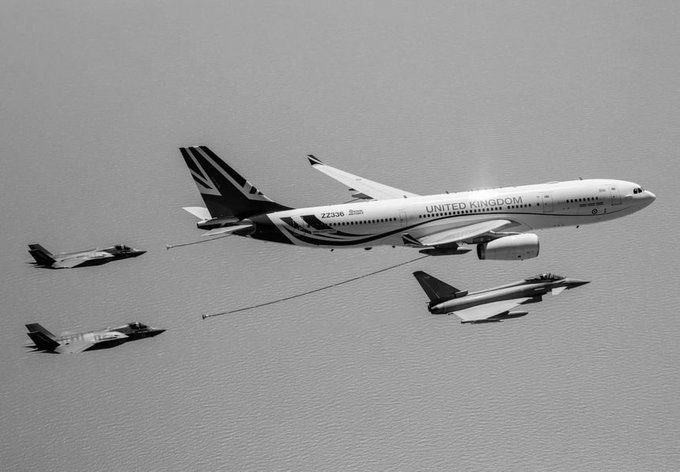
Saudi Arabia has been seeking help from allies as the Red Sea war rapidly escalates, and the UK has now become the latest country to step in. Britain has agreed to provide aerial military support, dispatching a Royal Air Force (RAF) Voyager tanker from Cyprus to refuel Saudi warplanes mid-air as they intercept incoming Houthi missiles and drones.
The UK has described the move as defensive support. Defence Minister Ben Wallace said the assistance was being provided for Britain's own national security and reflected the need for Western allies to stand together. But tactically, even a single RAF Voyager could become a major force multiplier for Saudi Arabia.
Modern air defence depends not only on stationary systems such as the UK's Sky Sabre systems already deployed in Saudi Arabia, but also on maintaining continuous combat air patrols. Aerial refuelling would allow Saudi Eurofighter Typhoons to remain airborne for hours longer, helping defend against swarms of cheap, low-altitude Houthi drones and ballistic missiles before they reach critical energy infrastructure or cities such as Riyadh. The tanker could therefore support defensive missions while also giving Saudi jets more fuel for offensive operations. Air-to-air refuelling is expected to begin in the coming days, with the deployment lasting several weeks.
The Saudi request came after a sharp rise in Houthi missile and drone attacks and a lightning offensive along Yemen's Red Sea coast. Last Saturday, the Houthis targeted Riyadh, the first such attack on the Saudi capital in years, raising fears that the conflict could engulf the wider region.
Saudi Arabia has one of the region's most expensive militaries, having spent billions on Western fighter jets, missile systems, air defences and advanced weapons. Yet after years of fighting the Houthis, Riyadh is still seeking foreign assistance because the group is not fighting a conventional war. Its drones, ballistic missiles, rugged terrain, local networks and ability to absorb strikes have made it difficult to defeat or dislodge.
The battle is also moving closer to Saudi Arabia's heart, with Houthi attacks targeting energy infrastructure and the group seeking to consolidate its position along Yemen's Red Sea coast. That has implications far beyond the battlefield. At the southern end of the coast lies Bab el-Mandeb, a crucial maritime chokepoint, while the Strait of Hormuz is another vital energy route. Saudi Arabia and other Gulf states depend on these waterways to move oil and gas, making their security a global concern.
The UK is not alone. France has offered defensive support for Saudi energy infrastructure, while Turkey has been in contact with Riyadh and offered critical military assistance. NATO Secretary General Mark Rutte has also said European allies are discussing how they could respond.
Britain has previous experience confronting the Houthis. In 2024, it joined the US in airstrikes against Houthi targets inside Yemen, saying the strikes were necessary to protect shipping and lives. The latest deployment is more limited, but it expands Britain's military role.
The question now is how far that support could go. With air defence followed by refuelling and wider military assistance, the Red Sea conflict is increasingly becoming a test of how far Saudi Arabia's allies are prepared to go, and whether more countries could eventually be drawn into a much larger regional war.