
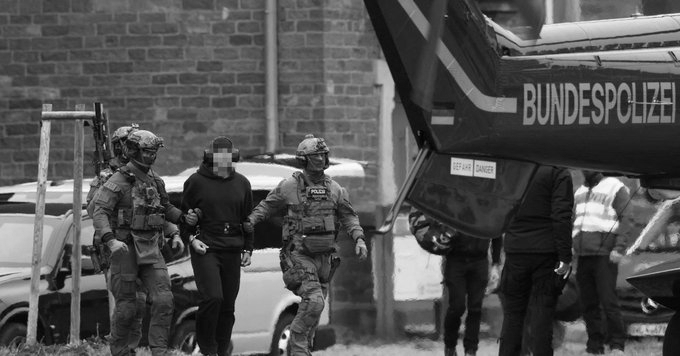
Ukrainian Ex-Officer Goes On Trial In Germany Over Nord Stream Pipeline Blasts
A former Ukrainian military officer went on trial in Germany on Wednesday over the 2022 Nord Stream pipeline blasts, as his defence team sought the dismissal of charges and argued that destroying the Russian gas infrastructure may not have constituted a crime.
The trial of 50-year-old Serhii Kuznetsov opened at the Hanseatic Higher Regional Court in Hamburg on October 14. He is the first suspect to face a public trial over the explosions that ruptured the undersea pipelines connecting Russia and Germany in September 2022.
German prosecutors accuse Kuznetsov of leading a group of Ukrainian operatives, including divers and an explosives expert, in a covert operation allegedly carried out with the knowledge of Ukrainian state authorities. He denies involvement in the attack.
His lawyers have challenged the prosecution's case, arguing that the pipelines could be considered a Russian weapon and that destroying infrastructure belonging to an aggressor during wartime may not be unlawful. Defence lawyer Nicola Canestrini questioned whether destroying such infrastructure without harming people amounted to a crime.
The defence also argued that Kuznetsov could not properly defend himself because his obligations under Ukrainian law prevented him from disclosing information connected to national security. He exercised his right to remain silent during the opening proceedings.
Prosecutors have charged him with causing explosions, damaging property, disrupting public services and being an accomplice to war crimes by attacking civilian infrastructure. They allege that the operation involved planting timed explosives on the pipelines using a rented yacht.
The defence has also questioned the legality of his extradition from Italy, arguing that Italian courts were not informed of the war-crime allegation when deciding to hand him over to Germany.
The Nord Stream 1 pipeline previously supplied around half of Germany's natural gas imports. Its twin, Nord Stream 2, was completed but never entered service after Berlin withdrew its approval following Russia's full-scale invasion of Ukraine in February 2022.
The September 2022 explosions ruptured three of the four pipelines, releasing large quantities of methane into the Baltic Sea atmosphere. The attack became one of Europe's most consequential infrastructure sabotage cases.
Kuznetsov was arrested in Italy in August 2025 and transferred to Germany in November. Another suspect, Ukrainian diver Vladimir Z., was arrested in Croatia and faces extradition proceedings.
Ukraine has denied involvement in the sabotage. The trial is expected to continue into early 2027, with further hearings scheduled in the coming months.