
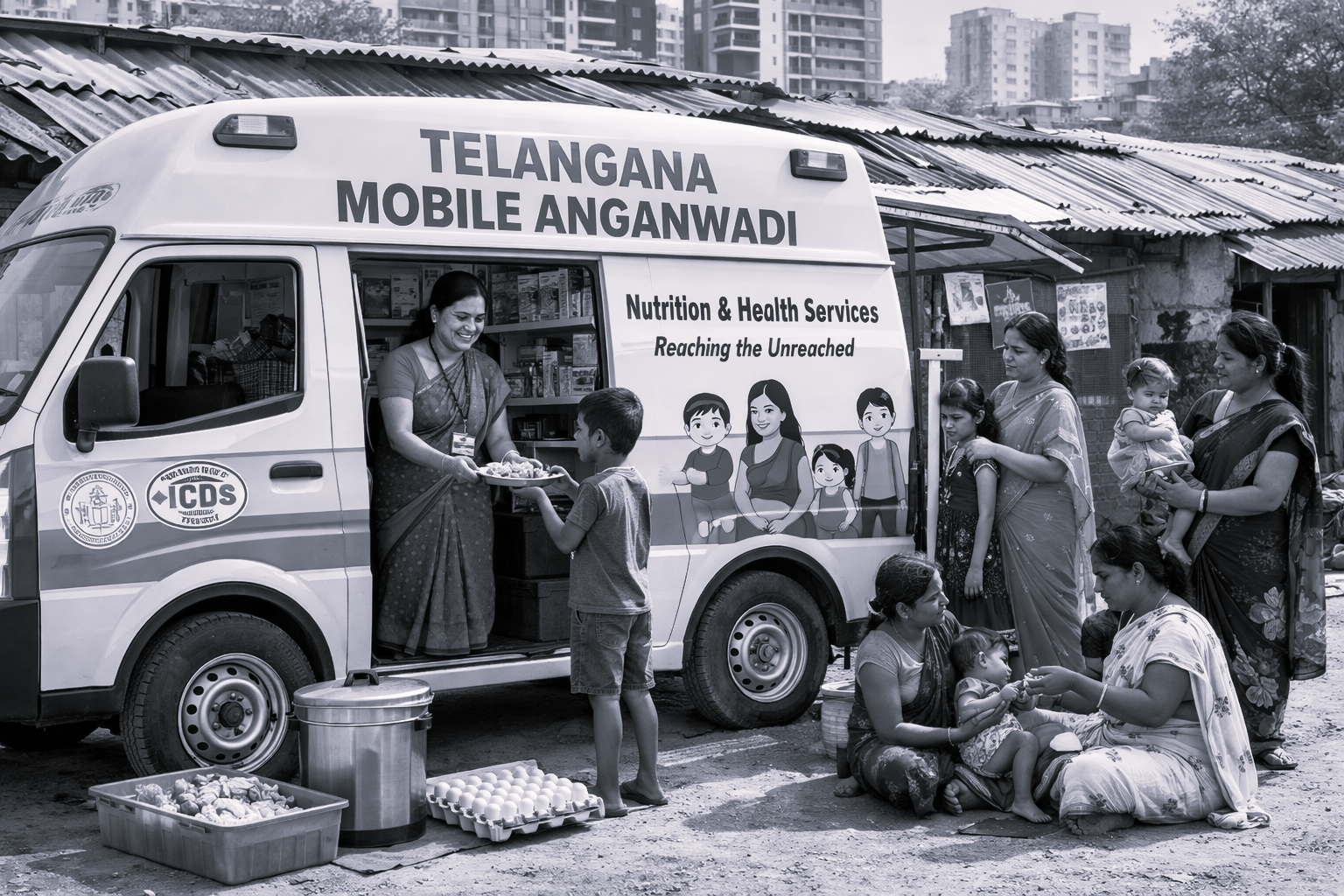
Under ‘Telangana Rising 2047’, Mobile Anganwadis Set for Hyderabad
In a significant step toward strengthening last-mile delivery of nutrition services , the Telangana government is preparing to introduce mobile anganwadi units across Hyderabad to serve children, pregnant women and lactating mothers in underserved urban pockets. The move follows a recent survey by the Women and Child Welfare Department , which identified 25,310 eligible beneficiaries within the Hyderabad Metropolitan Development Authority (HMDA) limits who currently lack access to anganwadi facilities due to infrastructure constraints.
Officials said the department has been facing persistent challenges in establishing permanent anganwadi centres in several localities because of high population density , frequent migration and the unavailability of suitable buildings . Rapid urbanisation has further complicated the expansion of fixed centres, especially in slum clusters and informal settlements where land and rental spaces are scarce or unaffordable. The proposed mobile model is intended to overcome these structural barriers and ensure that essential services reach vulnerable families without delay.
Under the plan, the department has proposed hiring 37 vehicles to function as mobile anganwadi units, which will cover 274 identified slum clusters in the city. These vehicles will be attached to the nearest existing anganwadi centres for administrative coordination and will distribute nutritious food while also delivering services related to early childhood care, maternal health support and supplementary nutrition under the Integrated Child Development Services (ICDS) framework .
State Women and Child Development Minister D Anasuya Seethakka has emphasised that no eligible beneficiary should be deprived of nutritious food and other anganwadi services, underscoring the government’s commitment to inclusive welfare delivery. The initiative aligns with the broader ‘Telangana Rising 2047’ vision , which places strong emphasis on addressing nutritional deficiencies , improving child development indicators and strengthening human capital in both rural and urban areas.
The proposed programme is estimated to cost around ₹4 crore annually . Officials said the proposal has been submitted to the competent authorities for approval, and the rollout will begin once clearance is granted. If implemented effectively, the mobile anganwadi model could serve as a scalable template for delivering welfare services in rapidly expanding urban centres where conventional infrastructure solutions remain limited.