
UP Bets Big on Sugarcane Intercropping to Multiply Farmer’s Income
Uttar Pradesh Chief Minister Yogi Adityanath on Monday announced a major new push for large-scale oilseed and pulse-based intercropping with sugarcane as a key strategy to boost agricultural growth and farmers’ incomes in the state. Chairing a high-level meeting, the chief minister said that adopting this model across Uttar Pradesh’s approximately 29.50 lakh hectares of sugarcane area could not only double but “multiply manifold” the income of sugarcane farmers, provide additional production, reduce costs and deliver more stable year-round earnings, thereby strengthening their economic conditions. He directed that the plan be implemented in mission mode from 2026-27 to 2030-31 in order to enhance crop output per unit area and contribute to broader agricultural transformation in the state.
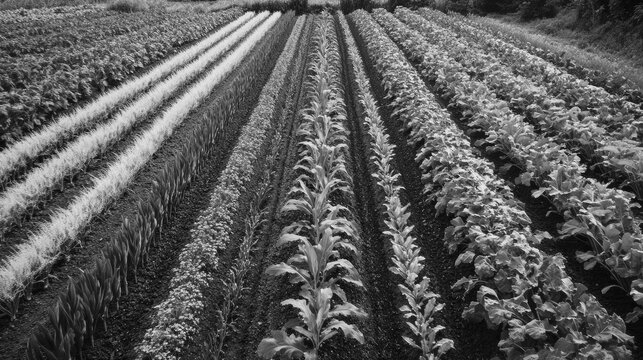
Intercropping is a farming technique in which two or more crops are grown together on the same land at the same time . Instead of planting a single crop in a field, farmers sow crops like mustard, lentil, urad and moong alongside a primary crop such as sugarcane . By doing so, different crops make efficient use of sunlight, nutrients and moisture, reduce the risk of total crop failure and often increase total production and income per hectare compared with growing just one crop alone. Pulses such as moong and urad are especially valuable in this context because they help improve soil fertility by naturally adding nitrogen, reducing the need for chemical fertilizers, and contributing to soil health.
In Uttar Pradesh itself, this intercropping push builds on traditional and modern agricultural practices that aim to maximise productivity without expanding cultivable land — a necessity, according to the chief minister, as horizontal expansion of farmland is no longer feasible. The state plans to choose intercrop combinations based on scientific guidance from agricultural universities and Krishi Vigyan Kendras, with mustard and lentil prioritized in the Rabi season and urad and moong in the Kharif season . The government also emphasises that adding oilseeds and pulses into the large sugarcane belt could strengthen not only farmer incomes at the state level but also contribute to national self-reliance in edible oils and pulses .
Beyond Uttar Pradesh, intercropping has long been practiced in other Indian states as a way to increase yields, reduce risk and improve soil health. In Andhra Pradesh , especially in dryland regions such as Anantapur , farmers often use groundnut + redgram or groundnut + castor systems under rainfed conditions, enabling them to derive income from multiple crops even when rainfall is limited. Similarly, in Telangana , particularly in rainfed cotton belts like Mahabubnagar and Mancherial , farmers grow cotton with pulses such as redgram. These combinations tend to produce higher cotton-equivalent yields and net returns compared with sole cropping, while also helping stabilise incomes in challenging climatic conditions.
Such intercropping systems make efficient use of land and water, improve resource utilisation and generally lead to more stable overall output and increased total farm income than traditional monoculture. Because legumes fix atmospheric nitrogen, they also contribute to better soil fertility and reduced fertilizer costs over time . Across regions practising these techniques, farmers are seeing both economic and ecological benefits , with income diversification, reduced risk from crop failures and improved soil health.
The Uttar Pradesh government’s new initiative aims to scale up these proven benefits to a much larger area, making intercropping a potentially transformative force in Indian agriculture by enhancing land productivity, strengthening farm economies and contributing to broader goals of agricultural sustainability and self-reliance.