
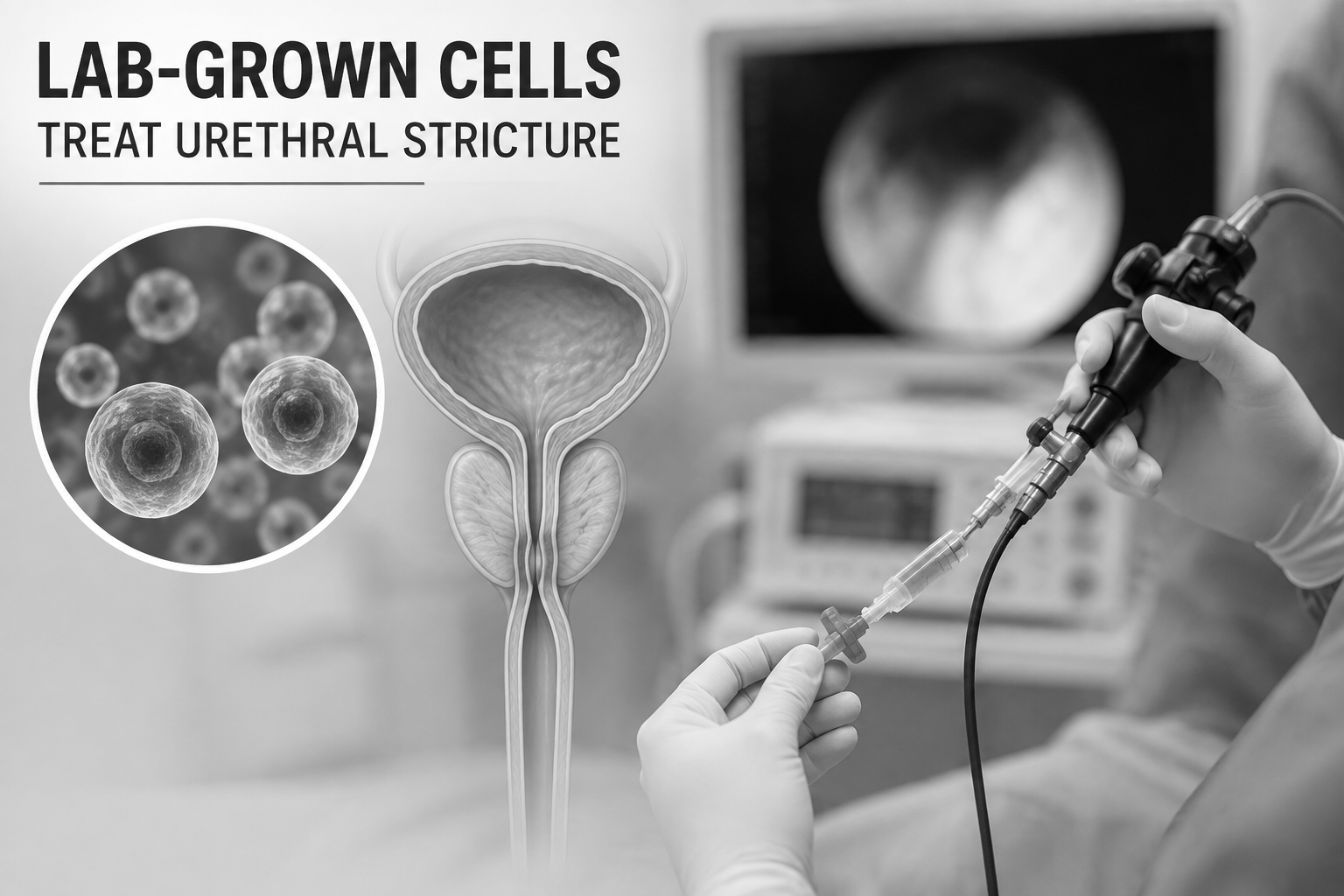
UP Hospital Claims Successful Use of Lab-Grown Cells to Treat Urethral Stricture
Uttar Pradesh hospital has claimed the successful use of lab-grown cells to treat urethral stricture, describing it as the first such procedure in the state. Doctors at Apollomedics Hospital, Lucknow, treated a 30-year-old man with a three-centimetre-long bulbar urethral stricture, a narrowing caused by scar tissue.
Doctors removed a small 10 mm by 5 mm tissue sample from inside the patient's cheek and sent it to a specialised laboratory in Pune. Over two weeks, the sample was expanded into nearly 50 lakh living cells. As the cells remain viable for around 72 hours, they were transported to Lucknow under a cold chain.
The cells were mixed with liquid thrombin and delivered endoscopically to the affected area after an incision was made over the stricture. The technique is intended to help the cells attach to the wound, promote healing and potentially reduce recurrent scar formation.
Dr Mayank Mohan Agrawal, Director and Head of Urology and Kidney Transplant, said the procedure took 15-20 minutes and avoided major incisions in the mouth and lower body required in conventional buccal mucosa graft urethroplasty. Cheek tissue is commonly used in urethral reconstruction because oral mucosa is durable and well suited to the urinary tract. Using the patient's own cells also reduces concerns linked to donor tissue.
Dr Ved Bhaskar said the hospital's claimed success rate of 70-80% was comparable with open surgery. However, available clinical evidence remains limited. Recent studies of cultured buccal cells have reported success rates ranging from around 53% to 73% at longer follow-ups, indicating that recurrence remains a concern.
Conventional endoscopic treatment can also recur, while urethroplasty generally offers more durable outcomes but involves greater surgical morbidity. The European Association of Urology says tissue-engineered oral mucosa remains an emerging approach requiring further evidence.
The cost of the new procedure has not been disclosed, and specialised laboratory processing and cold-chain transportation could limit accessibility. The hospital said the patient was discharged the next day, with the catheter expected to be removed after one week. Longer-term studies will be needed to establish its safety, recurrence rate and cost-effectiveness.