
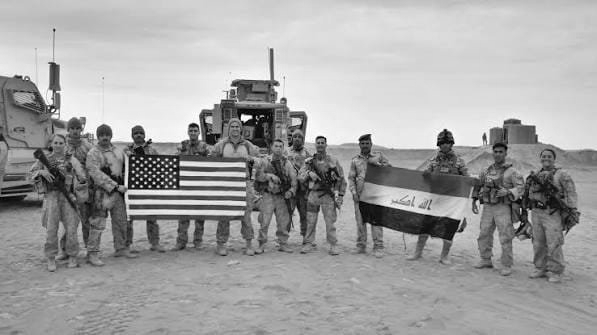
US Completes Troop Withdrawal From Iraq After 12-Year Anti-ISIS Mission
The United States has completed the withdrawal of its remaining troops from Iraq, ending a 12-year military mission focused on defeating the Islamic State group and marking a major shift in Washington’s security role in the country.
The final US troops and equipment left Erbil Air Base in northern Iraq’s semi-autonomous Kurdistan region on Wednesday under an agreement reached between Washington and Baghdad. The Pentagon said the departure marked the conclusion of Operation Inherent Resolve, the US-led military mission launched in 2014 to fight Islamic State.
The withdrawal comes nearly three years after the last US combat troops left Iraq in 2011 following the 2003 US-led invasion that toppled Saddam Hussein. American forces returned in 2014 after Islamic State fighters seized large parts of Iraq and Syria, prompting Baghdad to request international military assistance.
As Islamic State lost its territorial stronghold and was reduced largely to scattered sleeper cells, Washington and Baghdad agreed in 2024 to wind down the coalition’s military mission in Iraq. Most US troops had already withdrawn from Iraqi bases in 2025, leaving several hundred personnel in the Kurdish region until Wednesday’s final departure.
Pentagon spokesperson Sean Parnell said the withdrawal represented a transition from a wartime coalition operation to an Iraqi-led security effort backed by a more conventional bilateral defence relationship. The United States said it would continue providing targeted training and intelligence support to Iraqi partners even after the departure of troops.
The end of the mission comes as Iraq faces a complicated security environment involving Islamic State remnants, Iran-backed militias and the wider conflict between Washington and Tehran. US forces and facilities in Iraq had faced repeated attacks from Iran-aligned armed groups during the recent escalation.
The withdrawal has particularly raised concerns in the Kurdish region. The Kurdistan Regional Government’s Peshmerga Ministry said the region had experienced more than 1,000 drone and ballistic-missile attacks during the recent US-Iran conflict and warned that the removal of US air-defence systems was a cause for concern.
The Iraqi government, meanwhile, is facing the challenge of bringing powerful armed groups under state control. Baghdad had initially linked the September 30 withdrawal deadline to the disarmament of non-state militias, but several powerful Iran-aligned groups rejected the demand or attached conditions to any handover of weapons.
The government has subsequently pushed the target for completing the militia disarmament process to June 2027. Some groups have indicated that they have placed their weapons under state authority, while more powerful factions have continued to resist disarmament.
The US military said the responsibility for dealing with Iraq’s remaining security challenges, including Islamic State remnants and Iran-aligned militias, now rests primarily with the Iraqi government. The withdrawal therefore ends the US-led coalition’s military mission in Iraq but does not end Washington’s security relationship with Baghdad.
Iraq’s security forces and the Kurdish Peshmerga are now expected to take primary responsibility for preventing an Islamic State resurgence while the country navigates tensions involving Iran, armed groups and the continuing US-Iraq defence relationship.