
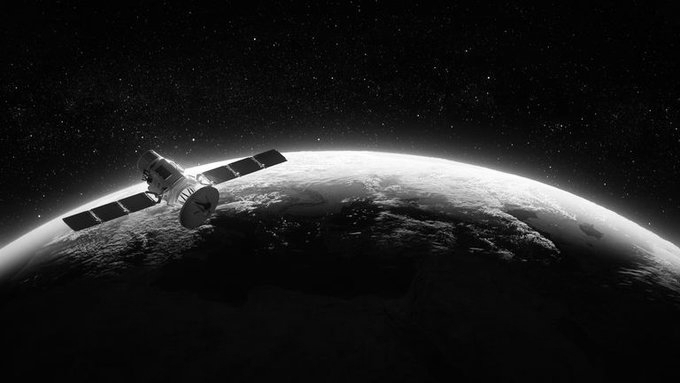
US Has Deployed Space Weapons. Does International Law Allow It?
The United States has confirmed for the first time that it has weapons deployed in orbit, a major shift in the military use of space that has already triggered a sharp reaction from China.
US Air Force Secretary Troy Meink said on September 14 that the US Space Force now has “on orbit space control weapons” capable of defending the Joint Force against hostile adversary action. The Space Force said space control includes both kinetic and non kinetic means and that such capabilities can be used for offensive as well as defensive purposes.
However, Washington has revealed little about the systems. Their number, location, deployment timeline and exact capabilities remain undisclosed. Analysts have suggested they could include electronic warfare or radio jamming systems, while kinetic capabilities are another possibility. A physically destructive weapon could create dangerous orbital debris.
The disclosure comes amid a growing US focus on counterspace capabilities from China and Russia. The US Space Force says China is developing space and counterspace systems as part of its military modernisation, while Russia views space as a warfighting domain.
China responded on September 15, urging Washington to “stop expanding its military presence and preparing for war in outer space”. Foreign Ministry spokesperson Guo Jiakun said Beijing opposes the weaponisation of space, turning it into a battlefield and a space arms race. China called for concrete action to preserve global strategic stability.
The development is also separate from the Trump administration’s Golden Dome missile defence programme, which includes a Space Force effort to develop space based interceptors. The programme aims to demonstrate an initial capability by 2028.
So, does international law allow weapons in orbit?
The 1967 Outer Space Treaty prohibits countries from placing nuclear weapons or other weapons of mass destruction in orbit. It also prohibits military bases and weapons testing on the Moon and other celestial bodies. However, it does not expressly ban conventional weapons in Earth orbit.
That means conventional orbital weapons are not automatically prohibited under the treaty. Their use could still raise questions under the UN Charter, including rules governing self defence, and under obligations requiring states to avoid harmful interference and damage in space.
The biggest concern is debris. Destroying a satellite could create thousands of fragments, threatening military and commercial spacecraft. With companies operating large satellite constellations for communications, navigation and other services, a major orbital conflict could have consequences far beyond the battlefield.