
US-Iran Versailles Peace Deal: Trump Declares Success as Iran Walks Away With the Big Bag
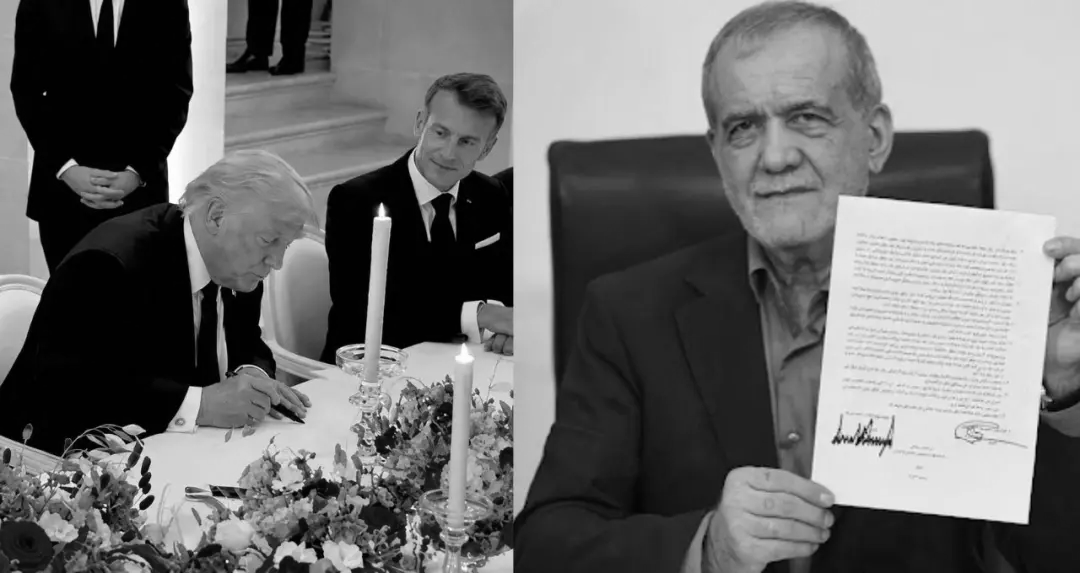
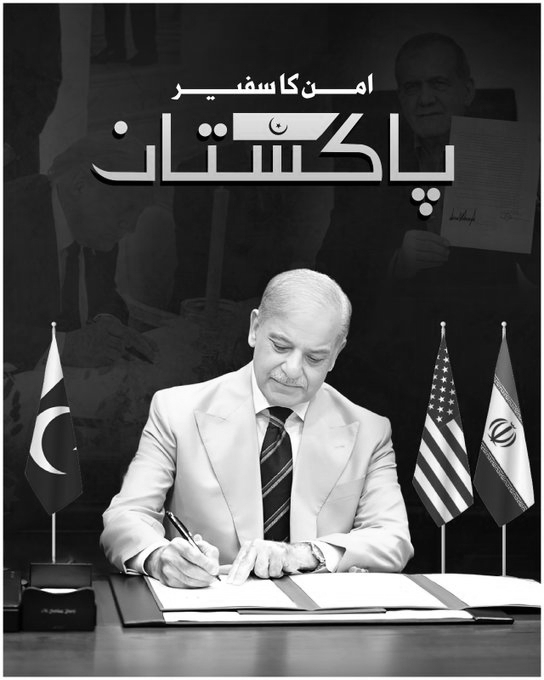
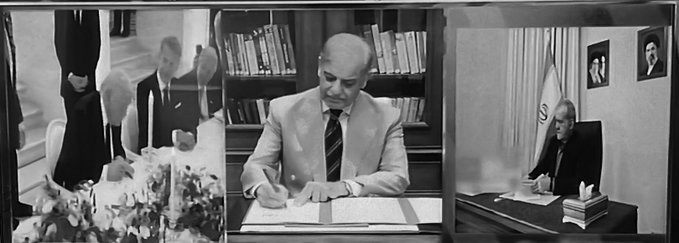
When Donald Trump signed the 14-point memorandum of understanding at the Palace of Versailles on the sidelines of the G7 summit on Wednesday night, he did so with characteristic theatre. "It's signed," he told reporters as he walked out. "Signed it in Versailles. Just signed it." Iranian President Masoud Pezeshkian signed his copy separately and digitally from Tehran, while Pakistan's Prime Minister Shehbaz Sharif signed from Islamabad, cementing his country's role as the quiet broker of what Trump is already calling the greatest diplomatic achievement in American history. The problem is that the deal's fine print tells a rather different story, one in which Iran emerged as the principal winner and the United States emerged with a promissory note , a 60-day window, and an awful lot of hope.
Start with the structure. The agreement is split into two phases. Phase One begins immediately , while Phase Two, the long-term framework , kicks in after 60 days of further negotiations, with the clock starting on the talks in Switzerland. That 60-day window can be extended by mutual consent , which means there is no hard deadline in practice. Trump himself acknowledged this, telling reporters the timeline was not "hard" and that reaching a deal "could take longer." "Just as long as they're behaving, I really don't care that much," he said. So much for maximum pressure.
Under the terms as they stand, the US commits to a phased lifting of all sanctions on Iran , including United Nations Security Council resolutions, IAEA board resolutions, and all unilateral American sanctions, both primary and secondary. This covers oil exports, petrochemicals, banking, insurance, and shipping , all at market prices. Iran will obtain access to its frozen funds based on the "progress" of negotiations in the next 60 days. In other words, America moves first and Iran performs later. Experts have already noted that this is structurally identical to the architecture of the Obama-era nuclear deal , the very agreement Trump spent a decade calling the worst in the history of American diplomacy.
The US also agrees to ensure financing of at least $300 billion for the rehabilitation and economic development of Iran. Trump says the mechanism for this has not been finalised and will be discussed during the 60-day window. But the number is in the document. Meanwhile, analysts estimate that sanctions relief alone could funnel tens of billions of dollars a year into Tehran , with experts warning that the cash flows overwhelmingly to the hardliners within the Iranian regime and not to ordinary Iranian citizens.
Then there is the nuclear question, which was the entire stated rationale for the war. Iran reiterates in the memorandum that it will not produce a nuclear weapon , and the fate of its enriched uranium and wider nuclear programme will be addressed in a final agreement. Notably, the ceasefire does not include an immediate demand for Iran to stop enriching uranium. The best that can be said is that enriched material would be downblended on Iranian soil. Iran never admitted it was building a nuclear weapon to begin with. It is Washington that spent years insisting it was. So Iran has now formally committed to not doing something it always denied doing, and received hundreds of billions of dollars in return. What a trade.
On ballistic missiles , Trump said at his press conference that he does not mind if Iran has them. " If other countries have them, it's a little bit fair for them not to have some ," he told reporters. " If Saudi Arabia and Qatar and they all have some, I would say in relative proportion, I think it's okay ." This from the president who entered the war calling Iran's missile arsenal an existential threat to the United States. The original red lines have not just moved. They have dissolved entirely.
The memorandum also carries no mention of Iran's conventional military forces, no commitment to stop funding Hezbollah , and no conditions on Iran's domestic political conduct. The deal explicitly bars the United States from interfering in Iran's internal affairs on anything from human rights to the political system to the shooting of protesters in the streets. And yet the same document warns against either side using the threat of force while the agreement is in force . Trump violated this on the very day of signing, warning Tehran: "If you don't adhere to the agreement, we're going to bomb the hell out of you." The ink was barely dry.
For Trump, the political logic is clear enough. The US stock market hit a fresh record high and oil prices fell on news of the deal. He will sell those numbers as vindication. He fired back at critics on Truth Social, calling those who questioned the deal's toughness " either jealous, bad people, or stupid. " It is the art of the deal , Trump-style: declare victory loudly enough and hope no one reads the footnotes.
But countries like India, which absorbed months of supply chain disruption , soaring fuel costs, and the agony of its nationals stranded at sea, have gained precisely nothing. The economic pain was real and the concessions were America's. If this is what winning looks like, one shudders to imagine what losing might have cost.