
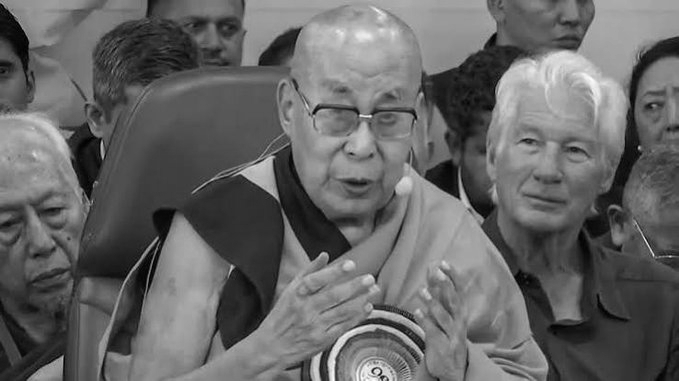
US Panel Urges Washington To Coordinate With India On Dalai Lama Succession, Reject China's Candidate
The succession of the Dalai Lama could become the next major geopolitical flashpoint between China and the West, with Washington being urged to work closely with New Delhi to prevent Beijing from controlling the process.
A bipartisan US congressional advisory panel has recommended establishing a senior-level coordination channel with India to prepare for the succession of the 14th Dalai Lama, warning that China could turn the process into an international contest over legitimacy and use coercive measures to influence its outcome.
In its report to the US Congress, the US-China Economic and Security Review Commission called for recognising the Gaden Phodrang Trust, established by the Dalai Lama in 2011, as the sole legitimate authority to identify and recognise his future reincarnation. It also urged Congress to adopt a policy of rejecting any successor selected or installed by the Chinese government.
The panel recommended directing the US Secretary of State to establish a formal channel with India for succession contingency planning, including intelligence sharing on Chinese influence operations. It also proposed internal scenario-planning exercises involving the National Security Adviser, Director of National Intelligence and Secretary of Defence.
Washington was further urged to conduct Track 1.5 and Track 2 dialogues with Indian counterparts to assess the political and security implications of different succession outcomes. The report also called for coordinating with US allies and partners to deny international legitimacy to any candidate backed by Beijing.
Another recommendation involves strengthening the Central Tibetan Administration's cybersecurity capabilities to counter Chinese cyber operations and artificial intelligence-enabled disinformation campaigns targeting the succession process.
China has long maintained that it has the authority to approve the selection of Tibetan Buddhist reincarnate leaders, citing historical practices such as the Golden Urn system. The Dalai Lama, however, has rejected Beijing's claim and said the responsibility for identifying his successor rests with the Gaden Phodrang Trust. In July 2025, he reaffirmed that the institution of the Dalai Lama would continue under the trust's supervision.
India is central to the dispute because the Dalai Lama has lived in Dharamshala since fleeing Tibet in 1959. The town also houses the Central Tibetan Administration, making New Delhi a key stakeholder. The panel warned that competing successors recognised by China and the Tibetan leadership could trigger a wider legitimacy dispute.
The recommendations are advisory and would require further action by Washington to become official US policy.