
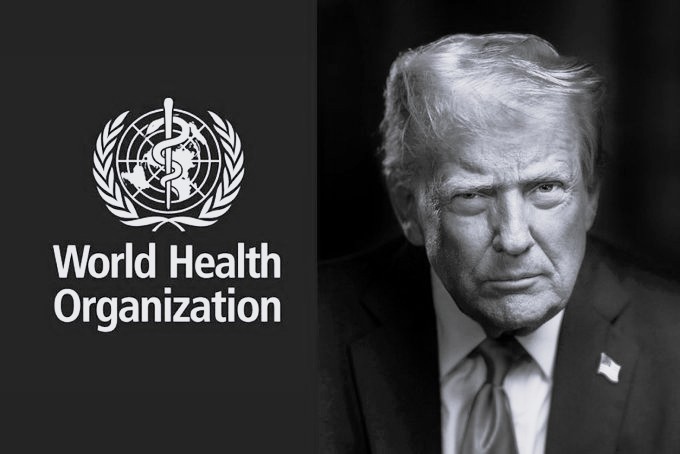
US quits WHO after 78 years, largest donor leaves global health body
The United States has formally completed its withdrawal from the World Health Organisation , ending its 78 year association with the United Nations’ specialised health agency, which currently has 194 member countries . The exit comes one year after President Donald Trump announced the decision, citing dissatisfaction with the WHO’s handling of the COVID 19 pandemic and what he described as the organisation’s failure to carry out urgent reforms.
Trump accused the World Health Organization (WHO) of mismanaging global health crises, showing political bias , and lacking independence from influential member states, repeatedly pointing to what he described as the organisation’s closeness to China . He alleged that the WHO was slow to challenge Beijing during the early stages of the COVID-19 outbreak and argued that Chinese influence had compromised the body’s neutrality. Trump also criticised the organisation for not having an American leader despite the United States being one of its largest contributors.
The US has long been the top donor to the WHO, contributing around USD 1.284 billion during the 2022-2023 period and expected to provide about USD 958 million for 2024-2025 through both mandatory dues and voluntary funding . Trump has cited this funding imbalance to reinforce his claim of political bias, arguing that American financial support was not matched by fair representation or independent decision making. This funding has been critical for global vaccination programmes, disease surveillance, and emergency health responses worldwide.
While the withdrawal is now complete, it has not been smooth. The WHO says the US still owes more than USD 133 million in unpaid dues for 2024 and 2025 , a claim denied by the Trump administration. The dispute has added to tensions between Washington and the global health body. Experts say this unpaid amount is not just a financial issue, but a sign of weakening global cooperation.
Health specialists warn that the US exit will weaken international disease surveillance and response systems. By leaving, the US has stopped participating in WHO committees, technical groups and data sharing mechanisms, including those that track circulating influenza strains and guide annual vaccine updates. This could slow the global response to future outbreaks and reduce early warning systems for emerging diseases. Experts also say that without WHO coordination, global programmes such as polio eradication, maternal and child health, and outbreak research could face funding and leadership gaps.
The US says it will shift from WHO-led coordination to direct bilateral partnerships, sharing health data and working with countries individually on disease surveillance and vaccine research. It also plans to continue global health efforts through other organisations like the Global Fund and Gavi , while relying on its own institutions such as the US Centers for Disease Control and Prevention . Critics say this approach cannot replace WHO’s global reach.
Although the US government has said it will seek direct health data sharing arrangements with individual countries, experts doubt such bilateral efforts can replace the WHO’s central coordinating role. The move has raised broader concerns about global preparedness for future pandemics and the long term strength of international health cooperation.