
US Strikes Another Boat In Eastern Pacific, Killing 2 In First Attack In Months
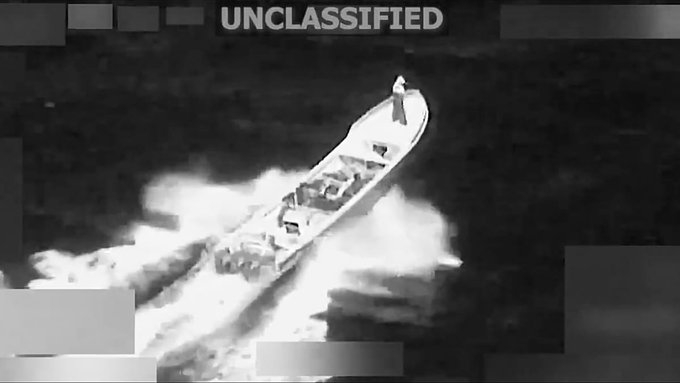
The US military has carried out another strike on a vessel in the eastern Pacific, killing two people accused of drug trafficking, in the first publicly announced attack of its kind in more than two months. The strike was carried out on Sunday, August 23, and announced by US Southern Command on Monday.
The latest operation brings the Trump administration's campaign against suspected drug trafficking vessels to 67 strikes and at least 223 deaths, according to updated tallies. The campaign, which began in September 2025, has targeted boats in the Caribbean and eastern Pacific that US officials say are involved in narcotics trafficking.
US Southern Command said the Joint Task Force Western Hemisphere carried out a “lethal kinetic strike” against a low profile vessel operating along established narcotrafficking routes. The command said intelligence had confirmed the vessel's active involvement in drug trafficking and described those killed as “narco-terrorists.” However, the Pentagon has not publicly released detailed evidence establishing what drugs the vessel was carrying or identifying the individuals killed.
Gen Francis Donovan, who leads US Southern Command, said Washington remained committed to disrupting trafficking networks, dismantling their leadership and combating cartel activity across the region.
The renewed strike comes as the Trump administration seeks to expand its anti-cartel campaign beyond maritime operations. Defense Secretary Pete Hegseth recently said Colombia, Guatemala and Honduras had agreed to allow joint US military operations against criminal groups on their territory. Guatemala, however, denied reaching such an agreement. Ecuador has already conducted similar joint missions with the US.
President Donald Trump has described the campaign as part of an “armed conflict” with drug cartels, arguing that stronger military action is necessary to stop narcotics from reaching the United States.
The strikes have faced growing criticism from lawmakers, human rights groups and military legal experts, who have questioned their legality, transparency and effectiveness. Critics have also pointed out that much of the fentanyl driving US overdose deaths enters the country over land from Mexico rather than by the maritime routes targeted in these operations. The Pentagon's inspector general is separately examining whether the military followed established targeting procedures during the campaign.