
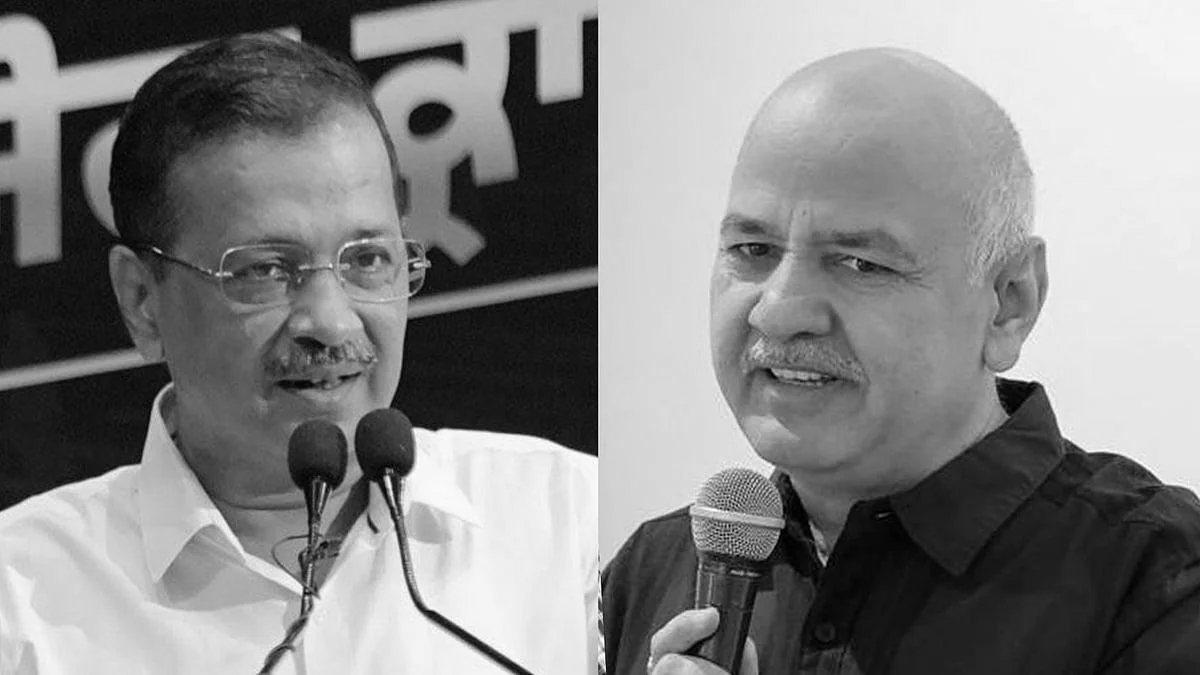
Vindicated!! Arvind Kejriwal, Manish Sisodia and Others Exonerated in Delhi Excise Case
In a judgment that has sent ripples through India’s political landscape, a Delhi court on February 27, 2026 discharged former Chief Minister Arvind Kejriwal , his deputy Manish Sisodia and 21 others in the controversial excise policy case, refusing to take cognisance of the chargesheet filed by the Central Bureau of Investigation. The order, delivered by Special Judge Jitendra Singh , did not merely grant relief; it dismantled the prosecution’s case at its very foundation. The court found no cogent evidence against Kejriwal and no prima facie case against Sisodia or the other accused , observing that the voluminous chargesheet suffered from internal contradictions , “misleading averments” and lacunae not supported by documentary proof or credible witness testimony.
In legal terms, a discharge carries a weight that goes beyond an acquittal. An acquittal follows a trial and signifies that the prosecution failed to prove guilt beyond reasonable doubt. A discharge, however, means the court has concluded that there was no case to begin with , that the material placed before it was insufficient even to frame charges. It is, in essence, a declaration that the prosecution’s theory collapses at the threshold.
The case arose from the now-scrapped 2021–22 excise policy introduced by the Delhi government, which aimed to reform the liquor trade and enhance revenue through private participation. Allegations of irregularities led to parallel probes by central agencies, high-profile arrests and prolonged incarceration. Sisodia, arrested in February 2023 , spent approximately 17 months in jail before securing bail. Kejriwal, arrested in March 2024 while still serving as Chief Minister, remained behind bars for nearly six months . The arrest of a sitting Chief Minister marked an extraordinary moment in independent India’s political history and triggered a fierce debate on federalism , agency autonomy and the limits of central power. The AAP alleged that the action was carried out at the behest of Prime Minister Narendra Modi and Union Home Minister Amit Shah, a charge the BJP denied, insisting that investigative agencies acted independently.
As the order was pronounced, a visibly emotional Kejriwal broke down before reporters. Calling the case the “biggest political conspiracy” in independent India, he said the court had proved that he, Sisodia and the Aam Aadmi Party were “Kattar Imaandar.” He alleged that the excise case was fabricated to crush a political movement that had unsettled entrenched power structures.
The larger story of AAP is inseparable from this verdict. Born out of the 2011–12 anti-corruption movement , the party emerged as a small band of activists and professionals with little money and no traditional political pedigree. They tapped into widespread discontent with corruption and the perceived arrogance of established political elites, transforming street-level agitation into a formidable electoral force in Delhi. Against the odds, they formed governments, reshaped debates around education, healthcare and public services , and challenged the belief that only entrenched parties with deep coffers could wield power. Yet their tenure was marked by repeated clashes with the Centre, including the curtailment of administrative powers that limited the elected government’s authority to appoint or transfer officers. Supporters argue that a web of investigations and legal cases followed, aimed at slowing or discrediting the movement.
The court’s discharge order is therefore being projected by AAP leaders as more than legal relief; it is being framed as moral vindication . They contend that it stands as a rebuke to those who, in their view, uncritically embraced the ruling establishment’s narrative while overlooking allegations of preferential deals and contracts benefiting powerful interests. The CBI has announced it will challenge the ruling before the Delhi High Court , ensuring that the legal battle is not yet over. But for now, the finding that the conspiracy theory did not withstand judicial scrutiny marks a defining moment in a case that once threatened to eclipse a political movement born from the promise of clean governance.
In the charged theatre of Indian politics, where accusations often precede evidence and narratives harden long before courts pronounce them, the discharge of Arvind Kejriwal and Manish Sisodia stands as a powerful reminder of the difference between allegation and proof, between the might of the State and the resilience of a political movement that insists it was targeted for daring to challenge it.