
We Are At War: Canada Vows To Respond As Trump Escalates Trade Fight
The US-Canada trade war has deepened dramatically after last-ditch talks collapsed, with Washington imposing 50 per cent tariffs on about USD 20 billion of Canadian goods and Ottawa preparing dollar-for-dollar retaliation from September 8.
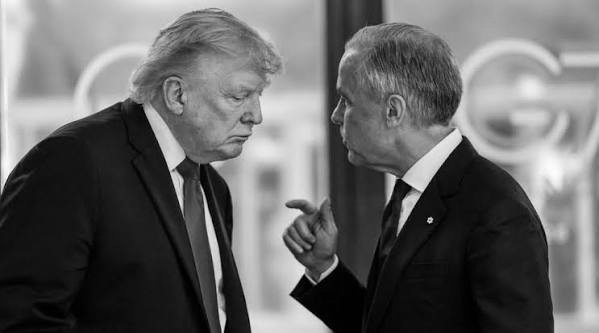
The dispute has also triggered an unusually bitter exchange between US President Donald Trump and Canadian Prime Minister Mark Carney, exposing the growing political rift between the two longtime allies.
Trump said Canada “gets a lot of freebies from us” and argued that Ottawa should be grateful to Washington. “Canada lives because of the United States,” he said, while defending US tariffs by accusing Canada of imposing high duties on American farmers.
Carney rejected that argument, saying: “Canada doesn’t live because of the United States. Canada thrives because we are Canadian.” He has repeatedly stressed that Canada is a sovereign nation, declaring: “Canada is not for sale. It never will be for sale.”
As negotiations broke down, Carney adopted increasingly forceful language. Asked about the confrontation, he said Canada had been “attacked” by the US tariffs. “You’re at war when you get attacked. We got attacked,” he said, insisting Ottawa had the “reserves,” “resilience” and “plan” to respond.
“Canada will match Washington’s new tariffs dollar for dollar in order to protect Canadian workers, farmers, families and businesses,” Carney said.
The Canadian leader said Washington’s final demands went too far. “They asked too much and they offered too little,” he said, adding that Ottawa was unwilling to compromise Canada’s sovereignty, key industries, language protections or culture.
Trump’s new duties target products including wine, furniture, dairy products, cement, clothing, fishing rods and hockey equipment. Canada’s retaliatory measures will focus on steel, dairy, appliances, agricultural equipment, pulp and paper and electronics.
US Trade Representative Jamieson Greer blamed Canada for rejecting what Washington described as favourable terms, saying the US had offered tariff reductions on sensitive sectors including steel, autos and lumber.
The collapse has put the future of the US-Mexico-Canada Agreement (USMCA) under renewed pressure. The two countries exchanged roughly USD 880 billion in goods and services last year, making the escalating dispute a major threat to North American supply chains.
Carney has said Canada will no longer expect a return to the old relationship with Washington, declaring that “America has changed.” With Ottawa’s retaliation set for September 8 and no fresh negotiations planned, the once-cooperative US-Canada alliance is entering its most serious economic confrontation in decades.