
When AI Starts Telling Stories: MIFF 2026 Redefines The Future Of Cinema
The 19th Mumbai International Film Festival (MIFF) 2026 reflected the rapid transformation of global cinema in the digital era, bringing together artificial intelligence-driven films, Oscar-winning short films, and expert discussions that together highlighted how storytelling is evolving while still retaining its human essence.
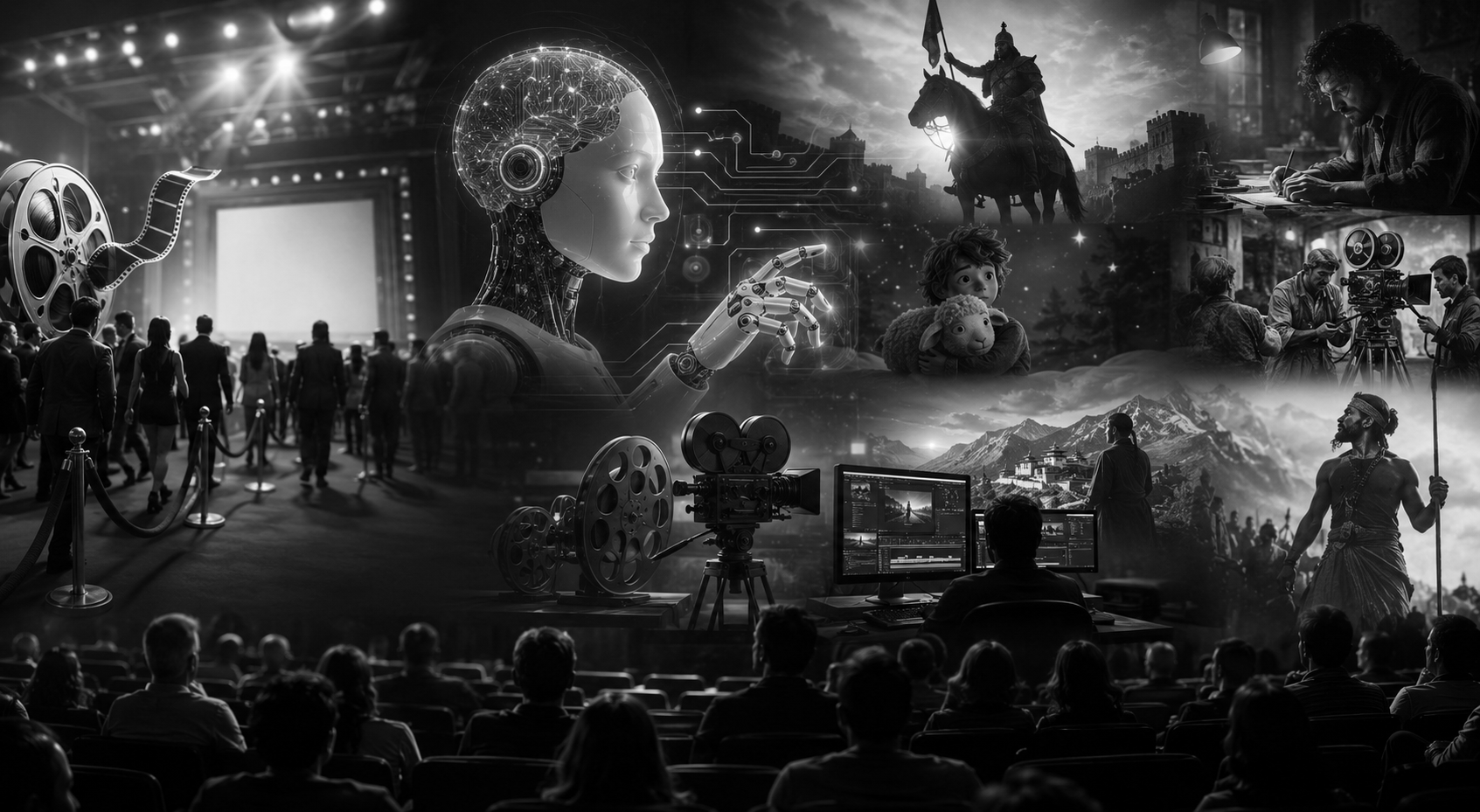
A key focus of this year’s festival was the special section titled “The AI Films” , which presented a curated selection of international works exploring the intersection of storytelling, imagination, and artificial intelligence. The films demonstrated how AI is increasingly being used as a creative tool in filmmaking , assisting directors and artists in building narratives that span history, mythology, memory, psychology, and experimental visual forms.
The section collectively reinforced a central idea: AI is not replacing human creativity, but expanding its possibilities . Filmmakers used AI-assisted techniques to explore visualisation styles and narrative structures that would be difficult or time-consuming to achieve through traditional production methods.
Among the notable films was Legends – The Eternal Flame of Mewar, directed by Deepak Vijay, which traced the historical legacy of the Mewar kingdom from Bappa Rawal to Maharana Pratap , blending historical narrative with imaginative reconstruction. Laurent Cliquet’s The Screenwriter offered a psychological exploration of a writer under creative pressure, using constrained framing and stylised visuals to reflect internal tension.
Xuan Li’s The Star Shepherd used felt-animation inspired by a UNICEF visit to Malawi to portray emotional connections across distance, demonstrating how AI-assisted animation can support sensitive, human-centred storytelling. Kishkindha: Van Katha by Aksht Verma drew from multiple ancient texts to reinterpret mythological narratives of the Vanara kingdom, while Stonewall, The Making of by Talya Lotan blurred the line between documentary and fiction by combining interviews, on-set footage, and reconstructed storytelling layers.
Other films expanded the thematic range of AI-assisted cinema. The Cinema That Never Was by Mark Wachholz used generative processes to evoke lost or unrealised cinematic histories, reflecting on absence and memory in film culture. The Echo Monastery, directed by Rajesh Bhatia and Bharat Arora, followed a grieving woman’s journey through silence and isolation in Ladakh. The Legend of Birsa Munda, an AI-assisted animated biographical film by Samresh Shrivastav, revisited the historic tribal resistance against colonial rule, highlighting indigenous resilience.
Across the section, the films collectively demonstrated that AI is functioning as an enabler of scale, imagination, and experimentation , while still relying on human direction for emotional depth and narrative intent.
Another major highlight of MIFF 2026 was the Oscar-winning short films section , which brought globally acclaimed works to Indian audiences and offered a rare opportunity to experience award-winning cinema in a festival setting.
The lineup included I Am Not a Robot by Victoria Warmerdam, a dark sci-fi comedy that follows a music producer who repeatedly fails CAPTCHA tests and begins questioning her own identity in a digitally controlled world. In the Shadow of Cypress by Shirin Sohani and Hossein Molayemi portrayed the emotional struggles of a former sea captain dealing with post-traumatic stress disorder and his strained relationship with his daughter, set against a quiet coastal backdrop.
The Girl Who Cried Pearls by Chris Lavis and Maciek Szczerbowski presented a fantasy narrative set in early 20th-century Montreal, where a boy falls in love with a girl whose tears transform into pearls, forcing him to confront themes of greed and genuine affection. Two People Exchanging Saliva by Natalie Musteata and Alexandre Singh offered a surreal dystopian world where emotional expression is heavily regulated, using absurd social rules to comment on control, intimacy, and human behaviour.
Audiences responded strongly to the screenings, appreciating the diversity of storytelling styles, emotional depth, and creative originality . The section reaffirmed MIFF’s role as a platform that connects Indian viewers with some of the most acclaimed international short films.
Alongside screenings, MIFF 2026 also hosted a significant open forum discussion titled “Changing Technologies, Changing Audiences: Are Film Festivals in Transition?” , where filmmakers, critics, and cultural scholars examined how festivals are adapting in the streaming and digital era.
Experts noted that while streaming platforms and digital technologies have transformed how films are produced and consumed, film festivals continue to hold strong relevance due to their unique cultural and institutional roles.
One of the key arguments was that film festivals preserve the collective cinematic experience , where audiences watch films together in theatres rather than in isolation. This shared viewing environment fosters emotional engagement, real-time reactions, and post-screening discussions, creating a sense of community that digital platforms cannot replicate.
Speakers also emphasised that festivals act as curated discovery platforms in an era of overwhelming content abundance. Unlike algorithm-driven streaming recommendations, festival selections are curated by programmers and experts who prioritise artistic value, innovation, and diversity. This ensures visibility for independent, experimental, and international films that might otherwise remain unseen.
The discussions further highlighted the role of festivals in promoting cultural exchange and global dialogue . By bringing together films and filmmakers from different countries, festivals enable audiences to engage with diverse perspectives, storytelling traditions, and social realities, making cinema a medium of cross-cultural understanding.
Another important aspect discussed was the educational and developmental role of festivals . Through workshops, open forums, masterclasses, and student engagement initiatives, festivals serve as learning spaces that support film literacy and nurture emerging talent. Experts also suggested that cinema studies should be more deeply integrated into academic institutions to build informed audiences.
The role of festivals as a launchpad for emerging filmmakers was also emphasised. Short films and documentaries often gain their first major recognition at festivals, helping creators access funding, distribution opportunities, and international visibility. This function remains crucial in an industry where mainstream platforms are highly competitive.
At the same time, speakers observed that technology has significantly improved access to cinema but has not altered the core purpose of festivals. While streaming platforms have widened availability and AI tools have transformed production processes, festivals continue to provide context, curation, recognition, and critical engagement , which remain essential for meaningful cinematic appreciation.
Concerns were also raised about the increasing number of commercially driven or so-called fake film festivals , which may operate without proper artistic or regulatory standards. Experts cautioned that such events risk undermining the credibility of genuine festivals and can sometimes exploit independent filmmakers through non-transparent award systems. They called for stronger oversight mechanisms to preserve the integrity of the festival ecosystem.
As MIFF 2026 moves towards its conclusion, the festival stands out as a reflection of cinema in transition where artificial intelligence, global storytelling, and digital distribution platforms are reshaping how films are created and consumed.
Yet, despite these rapid technological changes, MIFF 2026 reaffirmed a consistent conclusion shared across screenings and discussions: film festivals remain essential not because they resist technology, but because they organise, interpret, and humanise it .
From AI-assisted mythological retellings and experimental narratives to Oscar-winning international shorts and debates on the future of cinema culture, MIFF 2026 demonstrated that festivals are no longer just exhibition spaces. They are evolving into dynamic cultural ecosystems where cinema is experienced, questioned, and reimagined .
In an age defined by streaming abundance and rapid technological innovation, film festivals continue to stand as rare spaces where cinema is not only watched, but collectively understood ensuring that the future of filmmaking remains deeply connected to its most important element: the human experience.