
Will 2027 Change the World? The Economist's 10 Predictions Will Make You Think
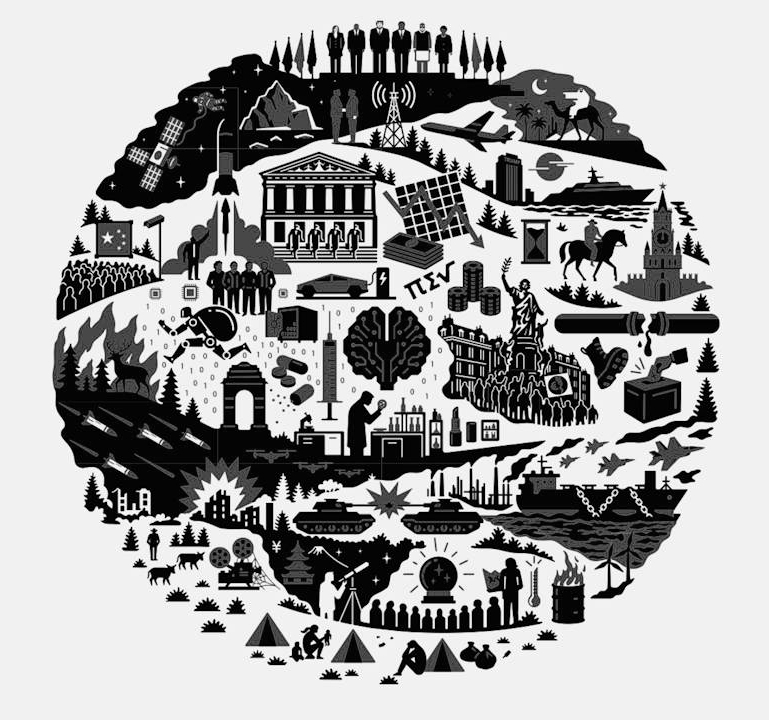
Missiles, tanks, burning oil barrels, a falling stock-market graph, medicines, robots and electric vehicles feature on the cover of The Economist's annual edition, 'The World Ahead 2027'. Designed by American artist Cleon Peterson, the illustration reflects 10 major themes identified by the magazine for the coming year. The meaning of every individual symbol, however, has not been officially confirmed.
Political imagery points towards the post-Donald Trump era in the United States. The magazine examines the possibility of Trump becoming more confrontational amid growing political divisions and the consequences of the US midterm elections.
Missiles, tanks, burning oil barrels and a chained ship suggest continuing geopolitical tensions. The aftermath of the Iran war could disrupt oil and fertiliser supplies, shipping and global trade. Disruptions around the Strait of Hormuz could also affect energy prices and food security.
Fire and environmental imagery point towards extreme weather. The magazine warns that 2027 could be another exceptionally hot year, with a possible El Niño increasing the risk of heatwaves, droughts and wildfires. Energy insecurity could also accelerate investment in solar and wind power.
Robots, digital imagery and a falling financial graph highlight concerns about the artificial intelligence boom. Heavy investment in data centres and computer chips, much of it supported by debt, could trigger a market correction if companies fail to generate expected returns. AI-powered cyberattacks and political manipulation are additional risks.
Political symbols appear to reference the 2027 French presidential election. A possible victory for far-right leader Marine Le Pen could strain the France-Germany partnership and reshape European politics.
The falling graph and money-related imagery also point to rising government debt and bond-market pressure. Higher borrowing costs could put additional strain on public finances.
Chinese imagery and military equipment suggest tensions between China and Taiwan. The magazine examines China's military readiness in 2027 and the possibility of confrontation. It also highlights how drones and relatively inexpensive weapons are changing modern warfare. This is not a prediction that China will invade Taiwan in 2027.
Syringes and pills appear to reference weight-loss drugs such as Ozempic. Their growing popularity could affect the pharmaceutical, clothing, cosmetics and fitness industries. The magazine also examines the development of longevity and anti-ageing treatments.
Rockets and satellites represent the commercial space industry, including SpaceX's Starship, privately operated space stations and the possibility of data centres in orbit.
Film-related imagery points to Hollywood's growing competition with YouTube creators and independent filmmakers, who are challenging traditional studios and major franchises such as Star Wars.
Other symbols invite interpretation. Tents and displaced people could represent homelessness and humanitarian insecurity, while surveillance equipment may point to digital monitoring. Electric vehicles and charging points could reflect changes in transport and energy. A chained ship may suggest restrictions on maritime trade. These interpretations have not been confirmed as separate predictions by the magazine.
Edited by Tom Standage, The World Ahead 2027 covers politics, conflict, finance, technology, climate, healthcare, space and entertainment.