
World Bank Reviews Sikkim Livelihood Programme, Explores Ecotourism Potential
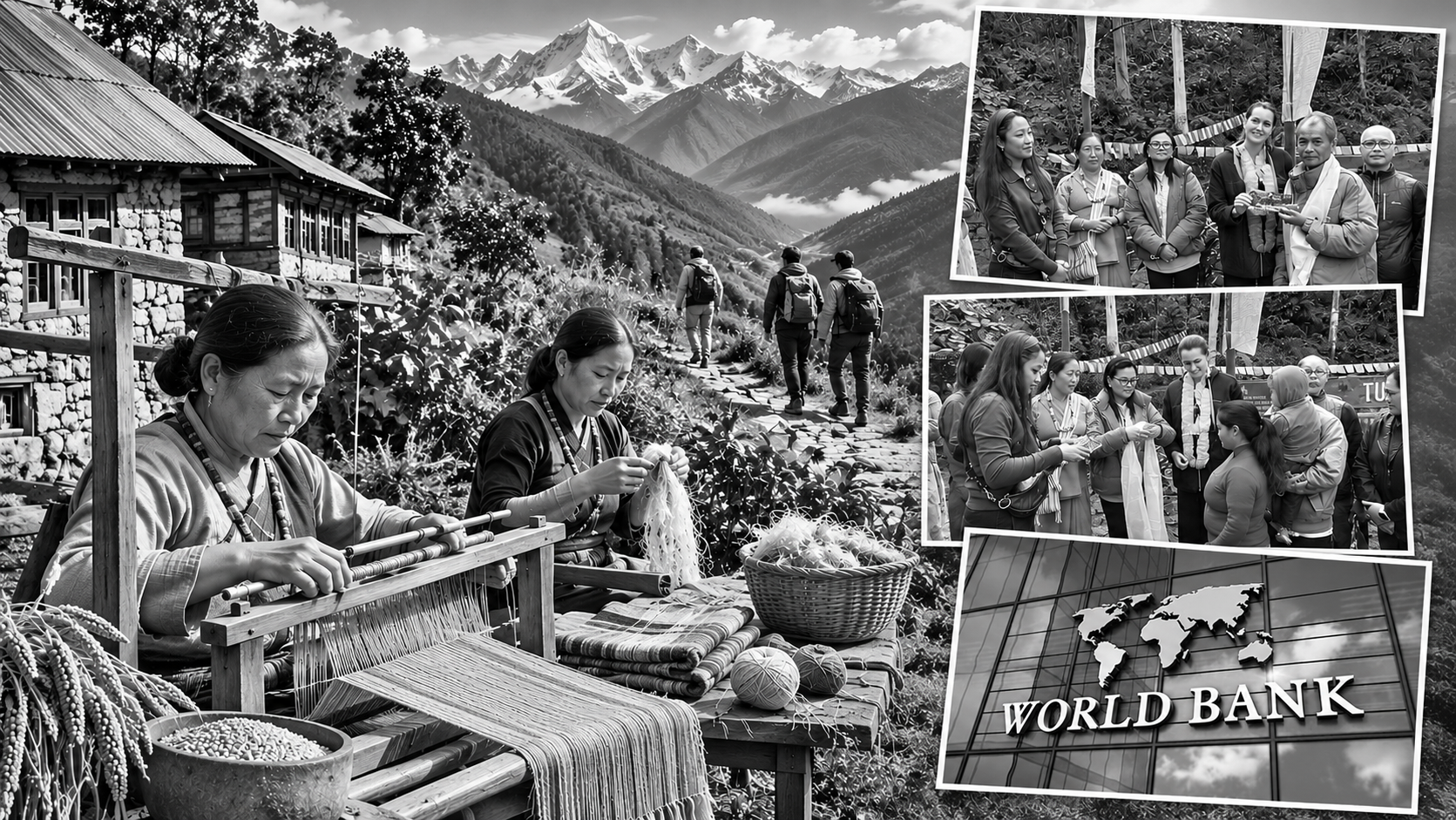
A World Bank delegation is visiting villages in North Sikkim's Dzongu region to assess livelihood initiatives and explore opportunities for community-led ecotourism, as part of the mid-term review of the Sikkim INSPIRES programme aimed at improving economic opportunities for women and young people.
The three-day visit to Lum and Hee Gyathang villages, which began on November 19, includes World Bank Task Team Leader Verena Phipps and Sikkim INSPIRES Programme Director Rohini Pradhan. The delegation interacted with panchayat representatives, residents and traditional knowledge holders, including Tshering Gyatso, popularly known as the 'Millet Man', and Bongthings, the traditional shamans of the Lepcha community, to understand indigenous food, wellness and medicinal practices.
Officials briefed the team on ecotourism initiatives, particularly the Lum-Sakyong trekking route, which connects lower elevations with high-altitude mountain landscapes. During the Hee Gyathang visit, Self-Help Groups demonstrated traditional nettle-fibre weaving, highlighting opportunities to promote indigenous handicrafts and generate income for local artisans. The delegation also visited Tashi Choeling Gumpa and Tungkyong Dho, a community-protected biodiversity site, to examine cultural tourism and conservation opportunities.
The World Bank-supported Sikkim INSPIRES (Integrated Service Provision and Innovation for Reviving Economies) programme has an estimated cost of USD 226.4 million, comprising USD 100 million in World Bank financing and USD 126.4 million in state government funding. Covering 2024-25 to 2028-29, it targets approximately 300,500 women and young people through employment, entrepreneurship and skill development.
Its six priority training sectors are tourism and hospitality, beauty and wellness, IT and IT-enabled services, green jobs, child and elderly care, and creative design. The programme also promotes an Employment and Entrepreneurship Promotion Facility, innovation hubs, acceleration centres, digital connectivity, childcare and mental health support. The state's Mega Homestay Scheme envisages 1,000 homestays, supported through government resources and programme-related capacity building.
At a November 17 review meeting, officials reported that 21 of 50 disbursement-linked results (42 per cent) had been achieved. All Year Zero and Year One targets were completed, alongside seven of 11 Year Two targets, eight of 12 Programme Action Plan requirements and all 10 legal covenants.
The state's 2026-27 Budget provides for expenditure of Rs 19,215 crore, including allocations for rural development, agriculture, education and social welfare. Complementary initiatives include One Family One Job, the Chief Minister's Entrepreneurship Initiative, the Aama Scheme and support for SHGs. The World Bank has called for greater focus on job retention, enterprise growth, private investment and community outreach during the programme's remaining implementation period.