
World Cup Racism Monitor Urges FIFA To Remove Official Over Controversial Hand Gesture
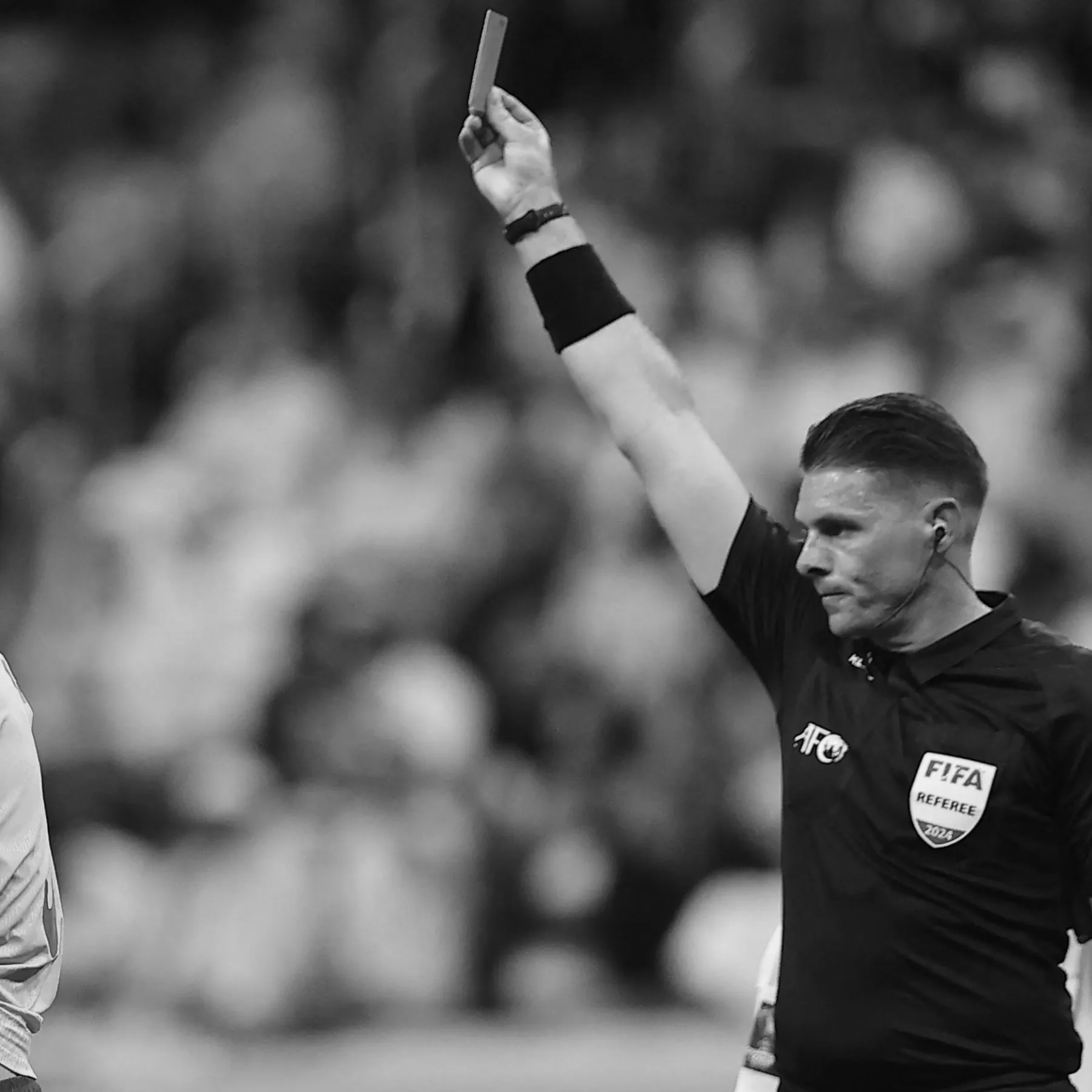
FIFA's anti-discrimination partner has called for the removal of an Australian video review official from the ongoing FIFA World Cup after he appeared to make a hand gesture that experts say resembles a symbol used by white supremacist groups.
The controversy arose during the television broadcast before Germany's opening World Cup match against Curaçao on Sunday. As cameras introduced the team of Video Assistant Referee (VAR) analysts working from FIFA's World Cup broadcast centre in Dallas, Australian official Shaun Evans was seen making an upside-down "OK" hand sign with his right hand.
The gesture, formed by touching the thumb and forefinger while extending the remaining fingers, has long been used as a harmless symbol indicating approval. It is also associated with the "circle game," a prank in which participants attempt to trick others into looking at a hand sign placed below the waist. However, in recent years the symbol has also been adopted by some far-right and white supremacist groups.
The anti-racism monitoring organisation Fare Network , which works closely with FIFA and UEFA to identify discriminatory behaviour at football matches, said its experts believe the gesture displayed by Evans closely resembles a symbol used in global far-right circles.
In a statement, Fare described the gesture as a "white power" symbol and argued that Evans should have "no further role" in the tournament. The organisation questioned why a VAR supervisor would make such a gesture while aware that television cameras were broadcasting his image to a global audience.
The symbol was added to the hate symbols database of the Anti-Defamation League (ADL) in 2019. At the time, ADL officials emphasised that context remains crucial in determining whether the gesture is being used innocently or as an expression of extremist beliefs.
Despite the criticism, there is currently no evidence that Evans intended to convey a political or racist message . FIFA had not publicly commented on the matter at the time of reporting, while Australia's football authorities and referees' association were also approached for responses.
The incident has renewed discussion about the challenges facing international sporting bodies as they seek to combat racism and discrimination while ensuring allegations are evaluated fairly and based on clear evidence. It also highlights the heightened scrutiny of officials and participants at major global sporting events.