
World Lion Day 2026: India Celebrates Asiatic Lion Population Rise Of 70% In A Decade
India is celebrating World Lion Day 2026 with a strong focus on the remarkable recovery of the Asiatic lion and the growing efforts to protect its last wild population.
The Asiatic lion population has increased from 523 in 2015 to 891 in 2025, a rise of more than 70% in a decade. The latest figure is also 32% higher than the 674 lions recorded in 2020. The lion’s range has expanded to nearly 35,000 sq km, covering parts of 11 districts across Gujarat.
Union Environment Minister Bhupender Yadav marked the day by celebrating India’s conservation journey. He credited forest officials, frontline workers, conservationists and local communities for helping the Asiatic lion recover. He said protecting critical habitats and strengthening conservation programmes remain central to ensuring that the lion’s roar continues for future generations.
Prime Minister Narendra Modi also marked World Lion Day 2026 by sharing an article on the Asiatic lion’s comeback. He said the population is thriving and its habitat and range are expanding. Modi highlighted the government’s continued conservation efforts and strong participation from local communities.
Union Minister of State Kirti Vardhan Singh said India’s experience shows that development and nature can move together. He highlighted habitat protection, stronger conservation programmes and coexistence between people and wildlife.
Andhra Pradesh Deputy Chief Minister Pawan Kalyan also joined the celebrations, calling the “roar of the Asiatic Lion” the roar of Bharat’s wild heritage. He stressed the importance of protecting big cats and preserving India’s natural heritage.
The heart of this conservation story is Gir National Park and Wildlife Sanctuary in Gujarat, the last natural home of wild Asiatic lions. Gir’s dry forests, grasslands, hills and water sources support the species, while the wider Greater Gir landscape has allowed lions to move into forests, river corridors and other areas outside the main protected zone.
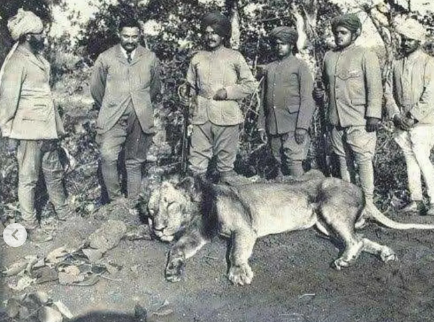
The Asiatic lion once ranged from Persia to Palamau in eastern India, but the 19th century brought a devastating decline. British colonial officers and Indian rulers hunted lions with increasing access to modern firearms, while expanding agriculture, livestock grazing and the loss of forests steadily destroyed their habitat and prey base. By the late 1880s, lions had disappeared from almost their entire Indian range. The Wildlife Institute of India records that fewer than 50 lions survived in Gir by the 1890s.
Gir became their last refuge. By the end of the 19th century, the Nawab of Junagadh reportedly put the number at just a dozen lions. The Nawab, despite the hunting culture of the time, recognised that the species was heading towards extinction and began protecting the remaining animals. Their numbers improved between 1904 and 1911, but the population remained dangerously small. After the Nawab’s death, around 12 to 13 lions were reportedly shot every year, prompting renewed alarm. By 1913, the Chief Forest Officer reported no more than 20 lions in the forests. Hunting was then brought under strict control.
But a bigger population brings new challenges, including human wildlife conflict, disease monitoring, veterinary care, prey availability and habitat connectivity. Barda Wildlife Sanctuary is being developed as a second home, with habitat improvement, grassland restoration and corridor protection.
Conservation also extends to captive breeding. Sakkarbaug Zoological Garden in Junagadh recorded 34 Asiatic lion cubs over the past five years, supporting the species’ breeding and conservation programme.
Project Lion remains central to India’s long term strategy. Announced by Prime Minister Modi in 2020, it focuses on habitat improvement, disease surveillance, veterinary care, scientific population monitoring, technology and community participation.
World Lion Day 2026 has also highlighted Gir’s conservation story. Rajya Sabha MP and wildlife enthusiast Parimal Nathwani released a documentary on Gir’s Asiatic lions, focusing on the landscape, conservation journey and the role of lionesses in raising cubs.
In May, Bhupender Yadav inaugurated the Lion Species Spotlight Programme at Sasan Gir, linked to the International Big Cat Alliance. The programme showcased Gir as an example of conservation alongside economic development.