
X-Ray Study of Blazars Offers New Clues to How Active Galaxies Are Powered
Astronomers studying some of the Universe’s most energetic objects have found new clues about the sources of X-ray emission from blazars, offering insights into how active galaxies are powered.
Researchers from the Aryabhatta Research Institute of Observational Sciences (ARIES), Nainital, an autonomous institute under the Department of Science and Technology (DST), studied four classical TeV blazars Mrk 421, Mrk 501, PG 1553+113 and PKS 2155-304.
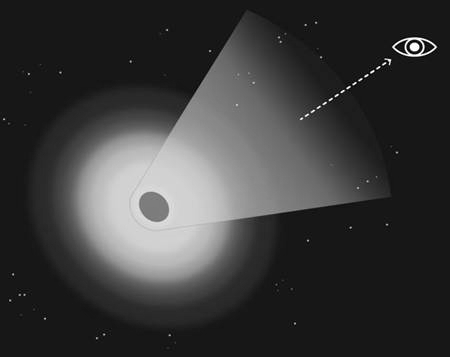
Blazars are active galaxies powered by supermassive black holes at their centres. As matter falls towards these black holes, enormous amounts of energy can be released, while powerful jets of relativistic particles are launched almost directly towards Earth, making the objects appear exceptionally bright.
The researchers, Riya Bhowmick and Alok C. Gupta, analysed 13 sets of X-ray observations obtained using NASA’s NICER and NuSTAR space telescopes. Seven of the 13 spectra were well explained by the standard blazar emission model, while six showed evidence of an additional component at lower X-ray energies.
Of these six spectra, four from Mrk 421 and two from Mrk 501 indicated a possible contribution from the accretion disk. The additional component appeared when the two blazars were in moderate- to low-active states, when their powerful jets were relatively weaker.
The jet normally dominates the X-ray emission, making radiation from the accretion disk difficult to detect. When the jet weakens, the relative contribution of the disk becomes more visible, allowing its emission to emerge in the X-ray spectrum.
While similar evidence had previously been reported for Mrk 421, the observations provide the first indication of a possible disk contribution from Mrk 501. Further observations are needed to confirm this interpretation.
Mrk 421 also showed a small additional Gaussian-like feature, though its origin remains uncertain and could be linked to instrumental or background effects.
The study, published in The Astrophysical Journal, could help scientists better understand how black holes interact with their surroundings and how active galaxies produce their enormous energy output.