
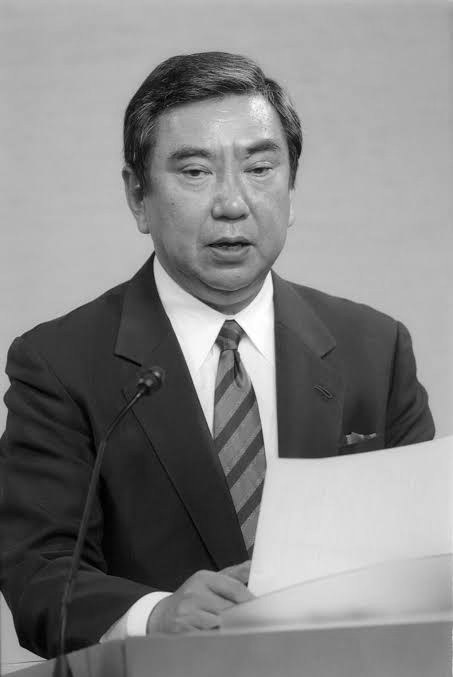
Yohei Kono, Japanese Lawmaker Who Issued Apology Over Wartime Brothels, Dies At 89
Former Japanese chief Cabinet secretary Yohei Kono, who issued a landmark apology acknowledging Japan’s wartime military involvement in sexual slavery , has died at the age of 89, officials said.
Kono died of old age on Monday, according to his office led by his son, former Foreign Minister Taro Kono. He remained active in informal diplomacy even after retiring from parliament in 2009.
Born in 1937 into a prominent political family, Kono entered politics in 1967 after the death of his father, Ichiro Kono, a senior Liberal Democratic Party figure. Over his career, he held key posts including foreign minister , deputy prime minister , and Speaker of Japan’s lower house.
His defining moment came in August 1993 when, as chief Cabinet secretary , he issued the Kono Statement following a government investigation into wartime records. The statement acknowledged that women were recruited “against their own will, through coercion and deception” for military-run brothels, and included the line: “We express our sincere apologies and remorse to all those who suffered immeasurable pain and incurable physical and psychological wounds.”
The apology became a cornerstone of Japan’s post-war reconciliation efforts and influenced the 1995 Murayama Statement by then Prime Minister Tomiichi Murayama, which also expressed remorse over Japan’s wartime aggression.
Kono consistently supported closer ties with China, South Korea and other Asian neighbours , but his position drew criticism from nationalist groups in Japan , especially during the political rise of Shinzo Abe, who led efforts to reinterpret aspects of wartime history.
In later years, Kono warned that attempts to downplay or whitewash historical facts would damage Japan’s international credibility. He continued to visit China regularly with delegations aimed at improving strained bilateral relations.
Following his death, Japanese political leaders expressed condolences, highlighting his role in shaping post-war diplomacy and reconciliation with Asia . China’s foreign ministry also paid tribute, calling him a figure who helped improve mutual understanding and bilateral ties between China and Japan .
His passing marks the end of a major chapter in Japan’s ongoing debate over wartime responsibility and historical memory in Asia.