
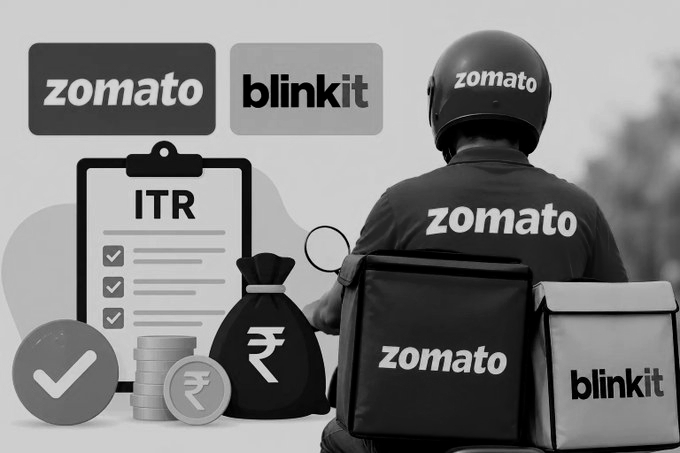
Zomato, Blinkit Enable ₹18 Crore in Tax Refunds for Delivery Partners
Eternal Ltd., the parent company of Zomato and Blinkit, has helped more than 100,000 delivery partners across 905 cities file their Income Tax Returns (ITRs) so far in 2026, reinforcing efforts to promote financial inclusion in India's growing gig economy.
The initiative has already enabled delivery partners to claim over ₹18 crore in income tax refunds. According to the company, nearly 73% of those who filed their returns were first-time ITR filers, indicating that a significant number of gig workers are entering the formal financial system for the first time.
Filing an ITR helps establish a documented financial history, improving access to personal loans, FD-backed credit cards, rental agreements, and other financial services that require proof of income.
"Delivery partners are at the centre of what we do, and we see it as our responsibility to support them well beyond their work on our platforms," said Aditya Mangla, CEO, Zomato. He said the company's focus is on strengthening delivery partners' financial security through ITR filing support, welfare benefits, and savings tools.
To simplify the process, Zomato and Blinkit offer a subsidised digital ITR filing service through a third-party integrated into their delivery partner apps. Partners can complete the filing process through a chatbot-enabled, self-service platform with OTP authentication, while additional assistance is available through chat and helplines.
The companies are driving awareness through in-app campaigns, delivery partner testimonials, and, in Blinkit's case, posters and LED displays at dark stores. The ITR filing deadline for gig workers is August 31, 2026.
The initiative is part of Eternal's broader efforts to improve the financial wellbeing of delivery partners through medical, accidental, maternity and OPD insurance, paid period rest days for women delivery partners, and financial products including fixed deposits, recurring deposits, and National Pension Scheme (NPS) accounts. The programme reflects the increasing role of digital platforms in helping gig workers build formal financial identities and long-term economic security.